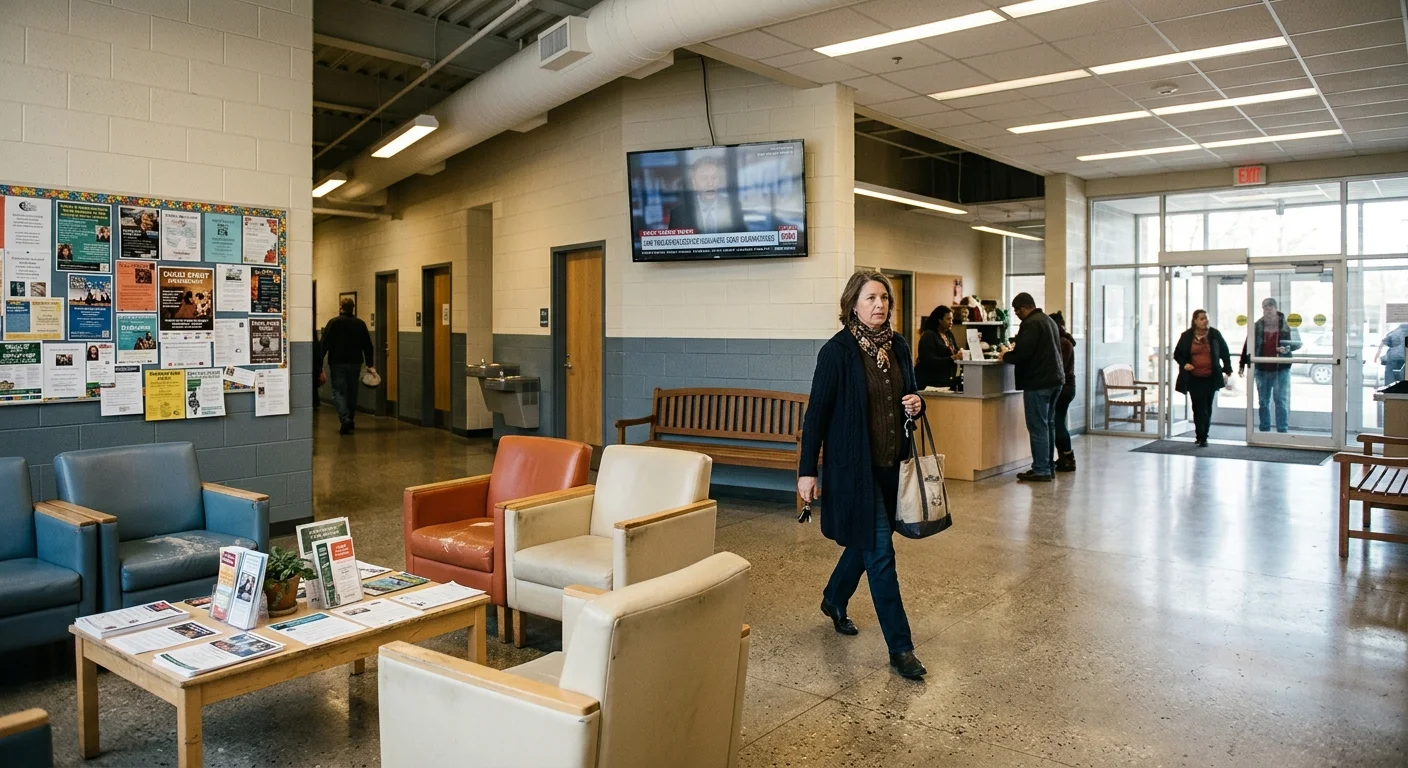
You cannot legally connect a consumer streaming account to your non-profit community center’s lobby television. Streaming—watching video over the internet instead of traditional cable—under a residential subscription violates federal copyright law the moment patrons gather to watch.
While consumer cord-cutting—canceling traditional cable or satellite TV in favor of streaming services—saves households money, federal regulations treat non-profit public spaces like commercial venues.
Standard copyright exemptions exclude internet apps completely. However, qualifying 501(c) non-profits can secure legitimate public exhibition tiers at significant discounts compared to corporate sports bars.

The Legal Reality: Consumer Streaming vs. Public Exhibition
Under the U.S. Copyright Act (17 U.S.C. § 101), any transmission displayed in a location open to the public constitutes a public performance. Your community center lobby qualifies as a public venue regardless of your non-profit status.
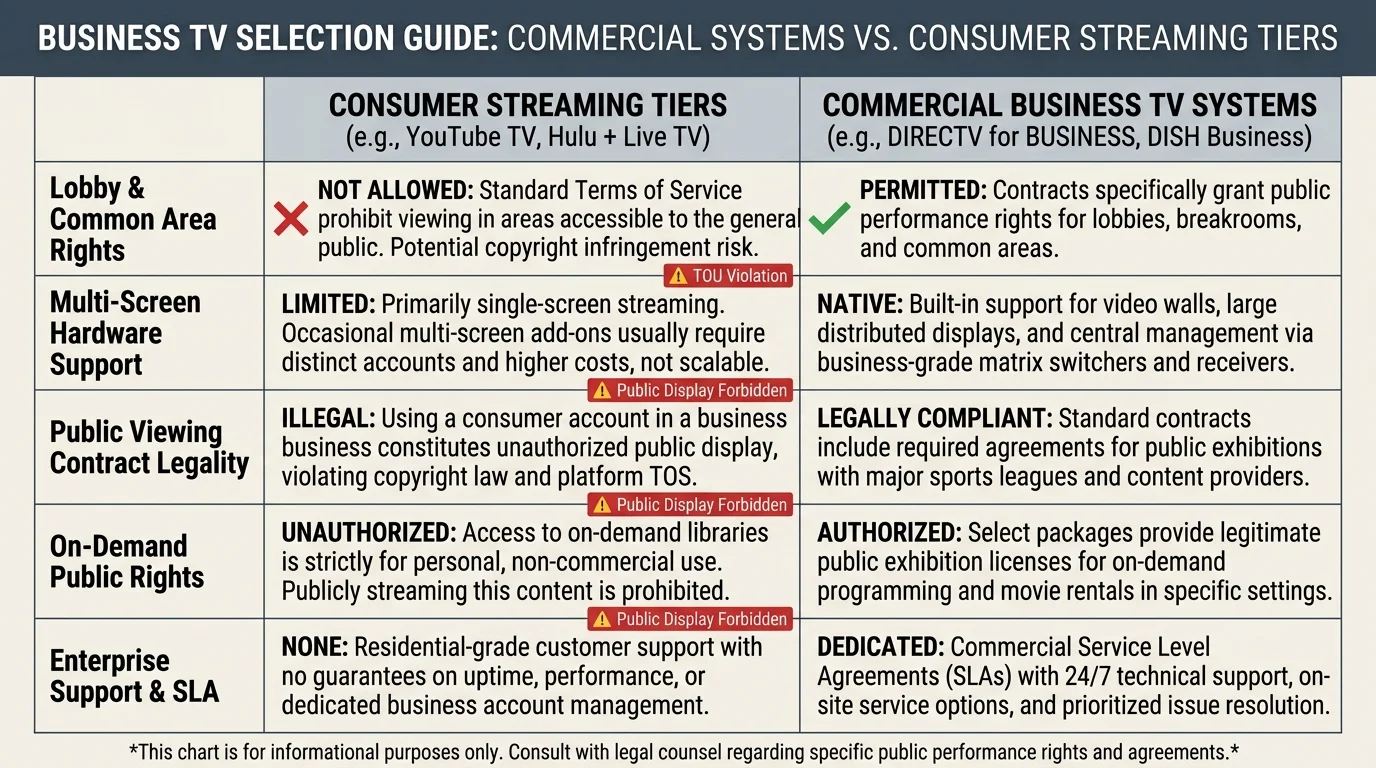
Residential streaming services explicitly restrict playback to private, personal, non-commercial use. The user agreements for platforms like YouTube TV, Hulu + Live TV, and Sling TV forbid displays in communal or public areas.
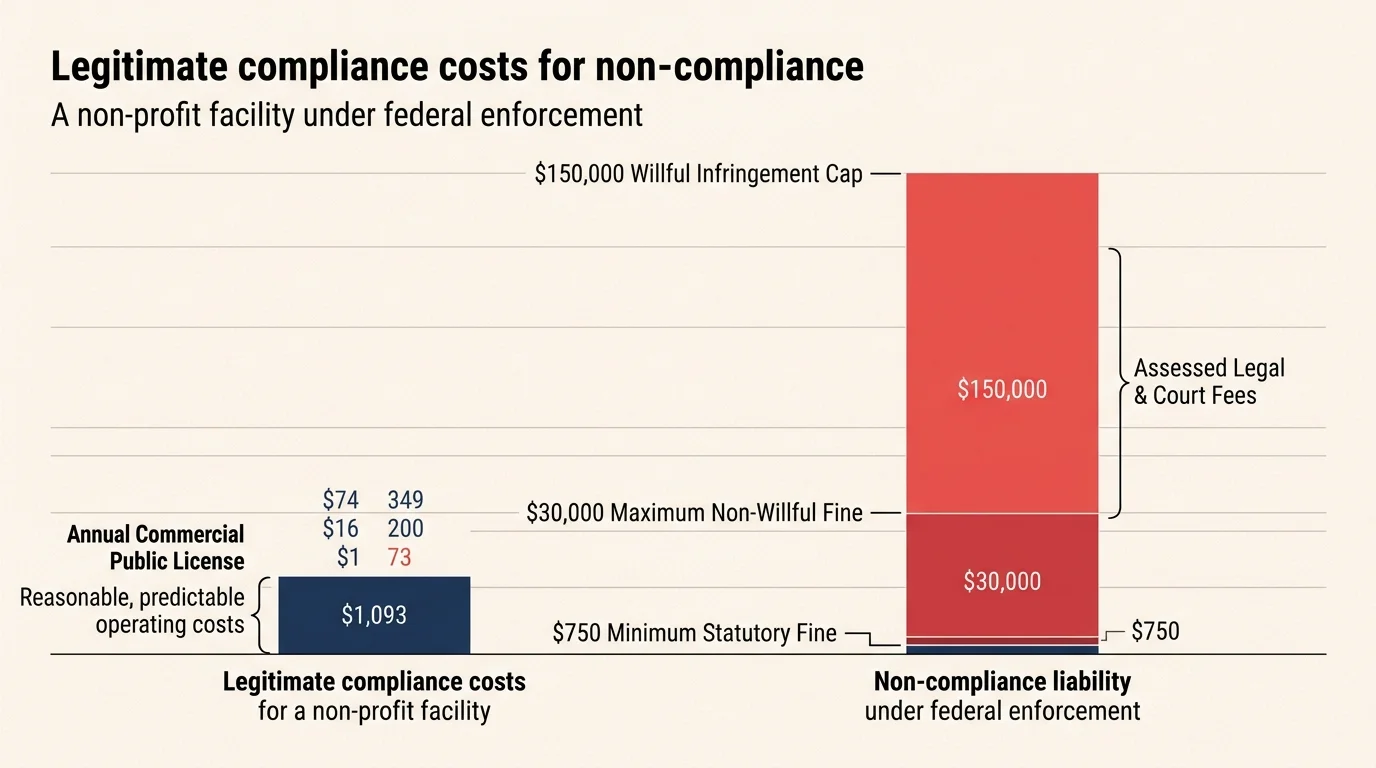
Copyright holders actively enforce these restrictions. Under 17 U.S.C. § 504, statutory damages for unauthorized public performances range from $750 to $30,000 per infringed work.
If an investigator proves willful infringement—such as showing a playoff game after receiving a cease-and-desist letter—fines can climb to $150,000 per broadcast. Federal courts also routinely assess full legal fees against non-compliant venues.
“Federal copyright law does not grant non-profit organizations a blanket waiver for public entertainment broadcasts. A public screen requires a public performance license.” — Commercial Licensing Specialist
Consumer services also prohibit on-demand playback in public areas. Playing on-demand content—programs you choose to watch whenever you want—violates distributor contracts just as severely as live broadcasting.
Why the Homestyle Exemption Excludes Internet Streaming Services
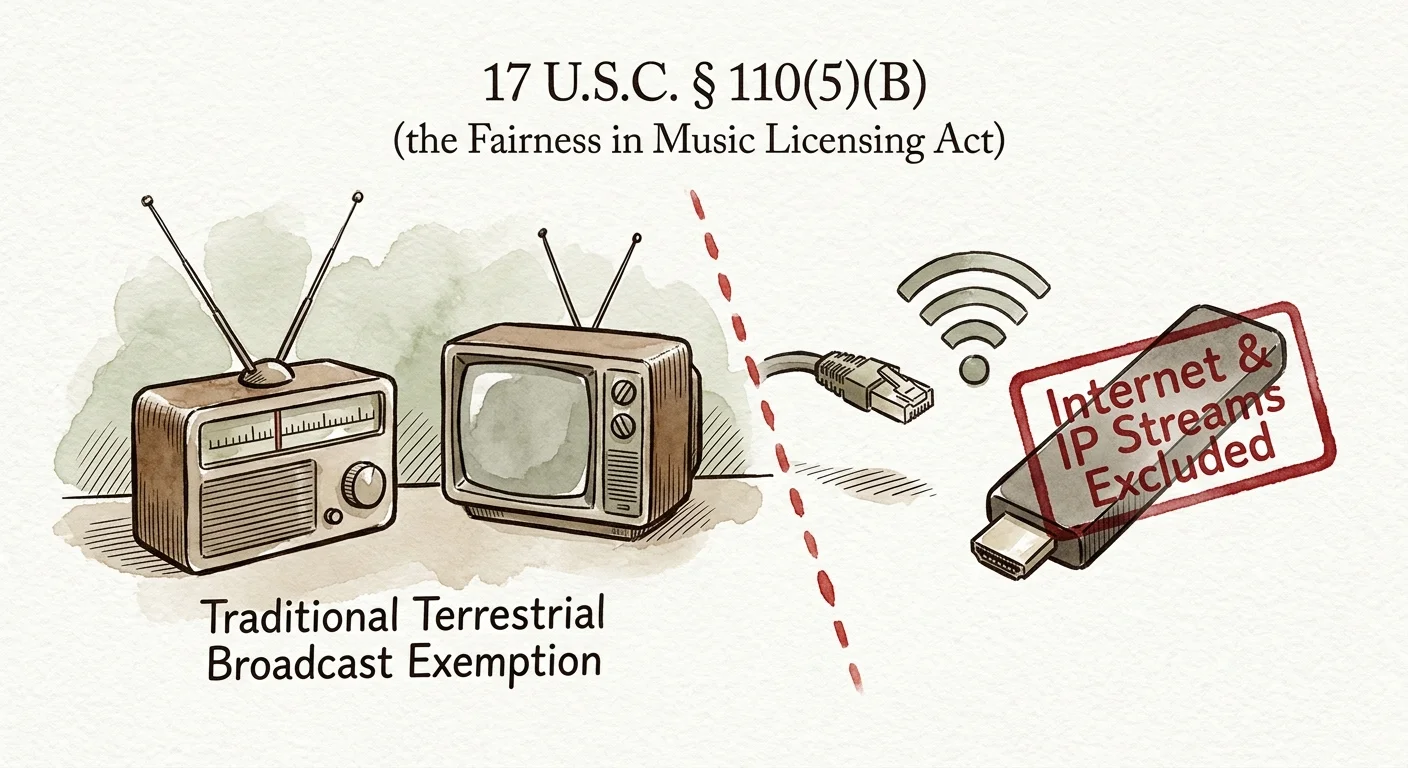
Many administrators mistakenly rely on the “homestyle exemption” codified in 17 U.S.C. § 110(5)(B) via the Fairness in Music Licensing Act of 1998. This provision permits small commercial operations to play limited broadcasts without paying separate music licensing fees.
Facilities wanting continuous news without commercial cable contracts can explore non-cable options for local broadcasts that utilize permitted over-the-air signals.
To qualify under this exemption, a non-food community establishment must occupy fewer than 2,000 gross square feet. Alternatively, larger spaces must limit hardware to no more than four total televisions, with only one television per room.
Furthermore, no individual screen may exceed 55 inches measured diagonally. If your community center lobby features a single 65-inch screen, you immediately fail the statutory size threshold.
More critically, the homestyle exemption applies exclusively to traditional over-the-air radio and television signals or standard satellite feeds. Federal statutes have never expanded this exemption to cover internet protocol transmissions.
Broadcasting through a modern streaming app bypasses the homestyle defense entirely. Even if your lobby measures under 2,000 square feet, using an internet streaming app to feed that screen triggers public exhibition liability.
A Worked Scenario: Non-Profit Lobby Licensing Costs vs. Statutory Fines
Consider a practical scenario involving the Oakridge Community Recreation Center, a registered 501(c)(3) organization. Director Elena manages a 2,500-square-foot lobby with a Fire Code Occupancy (FCO) limit of 50 people.
Much like navigating the unexpected costs and fees of cord cutting at home, facility managers must weigh upfront equipment and licensing tiers against long-term operational savings.
Elena mounted a 65-inch smart TV—a television with a built-in internet connection and apps—to entertain visitors waiting for youth programs and adult workshops. She wants to show Saturday afternoon college football games alongside daily news.
If Elena registers a standard consumer YouTube TV account at $72.99 per month, she spends $875.88 annually. However, because the lobby exceeds 2,000 square feet and uses a 65-inch display, she violates both copyright law and platform agreements.
An audit by a sports rights holder could identify three unauthorized college football broadcasts over one weekend. That exposure creates minimum statutory liability of $2,250 and potential willful damages reaching $450,000.
Instead, Elena contacts an authorized business provider for the DIRECTV Business Select Pack. Because Oakridge holds verifiable 501(c)(3) documentation, the commercial provider applies a non-profit discount, lowering the fee to $44.99 per month.
Elena signs a 24-month agreement, totaling $539.88 per year for linear satellite delivery. The provider contract includes full commercial display authorization for the lobby television.
Oakridge saves $336 annually compared to residential consumer streaming while eliminating hundreds of thousands of dollars in legal exposure. Legitimate commercial contracts often cost less than residential streaming subscriptions when non-profit institutions apply qualifying discounts.
Commercial Live TV Options: DIRECTV for Business, EverPass, and Joe Hand
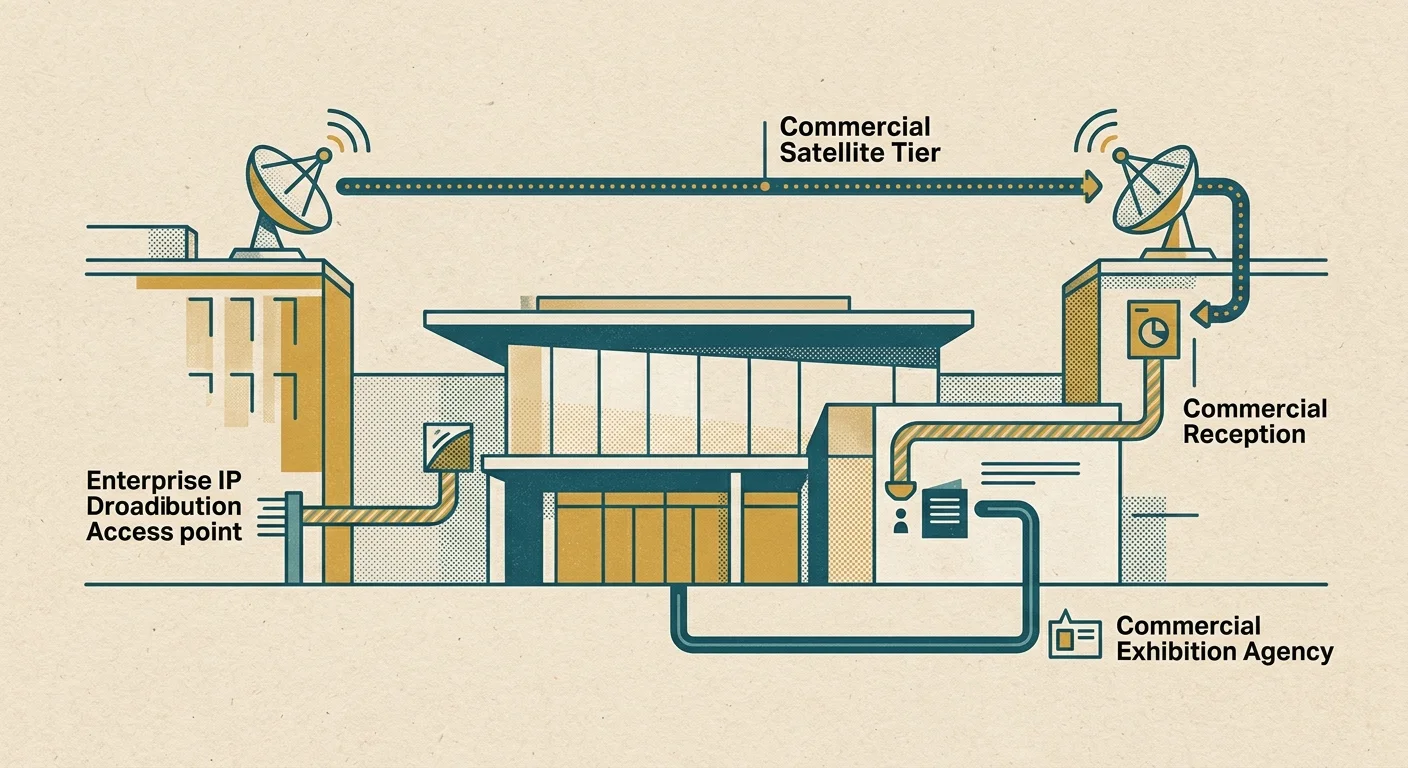
To broadcast legally, your community center must purchase services through authorized commercial distributors rather than residential portals. Commercial providers maintain distinct agreements with networks to clear out-of-home performance rights.
DIRECTV for Business remains the dominant provider for public lobby displays. Standard commercial packages range from $84.99 to $129.99 per month, but dedicated non-profit pricing tiers lower base costs substantially.
As Cord Cutters News reports, the migration of exclusive sports to digital platforms created new commercial rights agencies like EverPass Media. Traditional residential packages cannot supply streaming-only NFL or college games to public screens.
EverPass Media holds exclusive commercial distribution rights for premium digital packages, including NFL Sunday Ticket, Peacock Sports Pass, and Prime Video Sports. If your center streams Thursday Night Football, you must acquire an EverPass commercial license.
For community spaces hosting special weekend events with combat sports or martial arts exhibitions, Joe Hand Promotions manages the commercial closed-circuit distribution. Joe Hand calculates pricing strictly on your venue’s certified Fire Code Occupancy.
A non-profit center with an occupancy rating under 50 patrons pays far lower event rates than a commercial sports bar rated for 300 occupants. Always provide your official municipal occupancy certificate when requesting pricing from these agencies.
Managing Public Performance Music Royalties: ASCAP, BMI, and SESAC
Television programming contains significant amounts of copyrighted music embedded within commercials, station identification cues, and live sporting event broadcasts. Showing television publicly without clearance infringes on musical composition copyrights.
Performing Rights Organizations—specifically ASCAP, BMI, SESAC, and Global Music Rights (GMR)—represent composers and publishers. These agencies employ regional field agents who monitor commercial and community public spaces.
Muting the television eliminates music performance liability, but it destroys the viewing experience for live community sports gatherings. If you intend to play audible broadcasts, you must verify your provider’s music clearances.
Standard enterprise contracts from commercial television distributors frequently bundle ambient television music clearances directly into your monthly subscription. However, this coverage applies only to the direct audio coming from that specific video feed.
If your community center plays background music through ceiling speakers while the lobby screen plays sports on mute, you need independent blanket licenses. Annual blanket licenses from ASCAP and BMI typically cost between $300 and $700 per organization.
Comparing Commercial Systems and Consumer Live TV Tiers
Evaluating commercial solutions against consumer cord-cutting platforms requires comparing compliance, hardware demands, and true operational costs. The following table contrasts options available to public facilities.
| Service Tier | Monthly / Event Cost | Legal Viewing Location | Hardware Requirement | Contract Terms |
|---|---|---|---|---|
| DIRECTV Business (501c Nonprofit) | $44.99 to $64.99 / mo | Public Lobbies & Non-Profit Centers | Commercial Satellite or IP Receiver | 12 to 24 Months |
| DIRECTV Commercial Entertainment | $84.99 to $129.99 / mo | Offices, Lobbies & Small Venues | Proprietary Commercial Box | 24 Months |
| EverPass Media Sports Tier | $650 to $1,800 / year | Public Venues & Community Centers | EverPass Certified Media Device | Annual Agreement |
| YouTube TV (Consumer Tier) | $72.99 / mo | Private Residences Only | Consumer Streaming Stick or Smart TV | Month-to-Month |
| Hulu + Live TV (Consumer Tier) | $76.99 to $89.99 / mo | Private Residences Only | Consumer Streaming Device | Month-to-Month |
| Joe Hand Promotions (PPV Events) | $200 to $950 / event | Public Gatherings (Based on Occupancy) | Encrypted Commercial Satellite / Feed | Per Event License |
According to Tom’s Guide’s live TV analysis, consumer services provide affordable residential access, but their terms strictly ban multi-user out-of-home installations. Choosing consumer platforms to save money introduces severe financial risks.
Consumer platforms offer ad-supported plans—cheaper subscriptions that insert commercials—or ad-free options that bypass marketing interruptions. However, commercial tiers remain strictly ad-supported due to real-time linear broadcasting constraints.
Regional Sports Networks, Blackouts, and Local Channel Verification
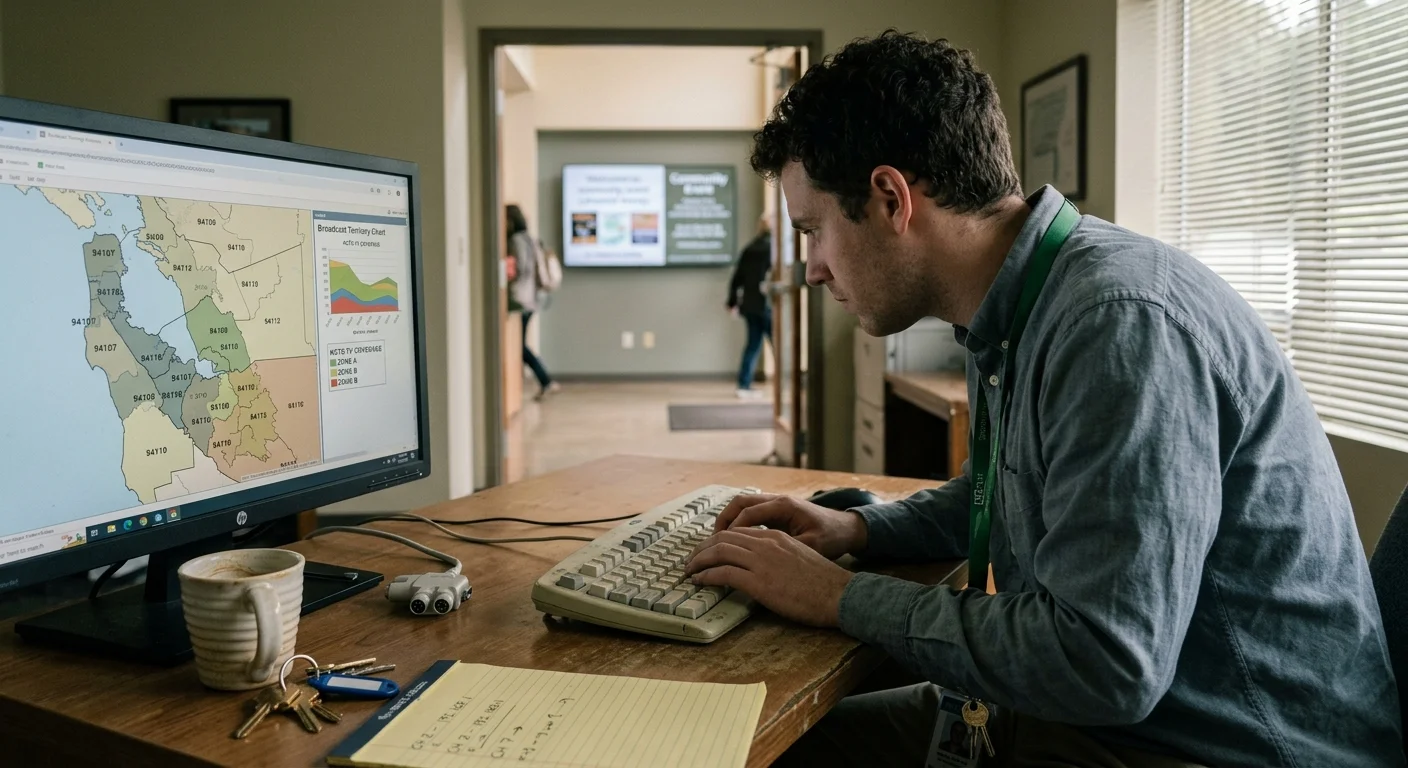
Carriage disputes and geographic broadcasting rights complicate sports delivery for public facilities. Regional Sports Networks (RSNs) carry local NBA, NHL, and Major League Baseball games but require specific distribution contracts.
Public screening coordinators must also anticipate broadcast blackout restrictions that can suddenly block regional sporting events on commercial schedules.
Public venues face complex territory rules, making it essential to understand how sports blackouts work on streaming platforms before advertising game broadcasts to the community.
Commercial DIRECTV packages include access to regional sports channels that consumer virtual providers frequently drop due to high carriage fees. Confirm your zip code’s specific network availability before ordering any commercial package.
Sports blackouts apply equally to commercial and consumer accounts. If a local game fails to sell out or falls under exclusive distribution rights, the network blacks out the feed automatically.
To verify local broadcast channels—such as ABC, CBS, NBC, and FOX—ask your commercial account representative for a localized station manifest. Never assume a package provides your regional news affiliate without explicit documentation.
Installing an over-the-air digital antenna provides a legal, zero-cost backup for local broadcast networks. However, your facility must still satisfy statutory homestyle size requirements to remain exempt from musical licensing claims.
Recording Limits and Multi-Screen Rules for Public Spaces
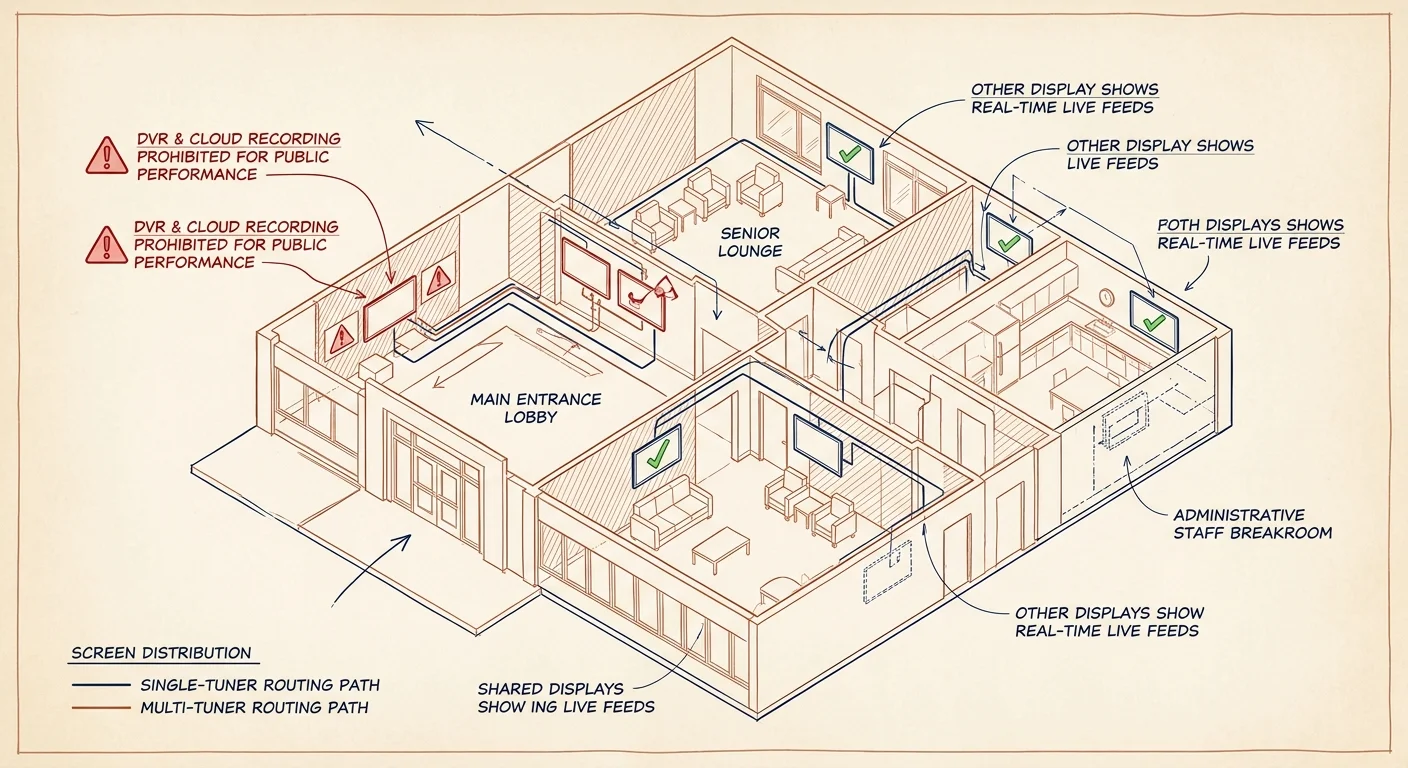
A DVR—a digital video recorder that lets you record and watch shows later—operates under rigid legal boundaries in public facilities. Residential cloud DVRs allow families to store hundreds of hours of entertainment indefinitely.
While home users rely on cloud DVR capabilities to record content, commercial agreements strictly limit rebroadcasting recorded programming in public lobbies.
While home viewers rely on cloud DVR storage limits and playback features to catch games later, commercial public exhibition contracts almost universally prohibit replaying recorded broadcasts.
Commercial installations generally prohibit the public exhibition of recorded DVR content. Networks license programming for real-time communal viewing, not unauthorized rebroadcasts hours or days later.
Displaying a recorded game in your recreation center hours after completion constitutes an unauthorized transmission under copyright law. Public broadcasts must remain synchronized with live network delivery schedules.
Simultaneous streaming caps also prevent multi-room distribution from a single commercial account. Commercial contracts license playback per screen, requiring dedicated commercial receivers or addressable digital endpoints for each television.
Splitting an HDMI signal to feed four lobby screens from a single residential box violates your contract. Commercial providers audit display outputs during setup to calculate accurate monthly licensing fees.
Selecting Compliant Hardware: Commercial Receivers vs. Consumer Devices
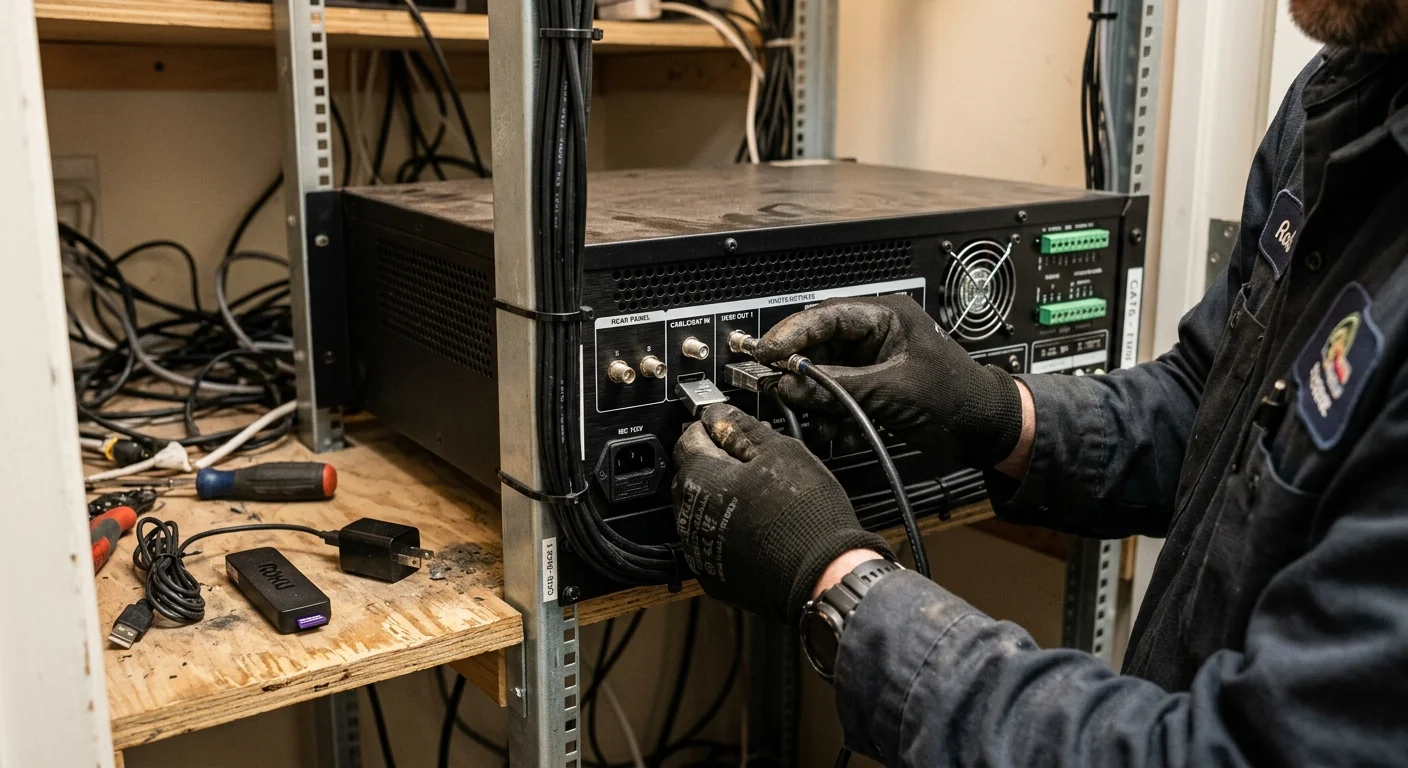
Consumer hardware introduces operational headaches in community lobbies. A standard streaming device—a small box or stick like a Roku or Fire TV that adds streaming to any TV—often fails in public settings.
Consumer devices frequently experience automatic sleep timeouts, unprompted software updates, and profile sign-out errors. Patrons or unsupervised youth can easily access administrative menus to purchase pay-per-view movies or modify network settings.
Commercial installations utilize heavy-duty, tamper-resistant set-top hardware. Commercial DIRECTV or EverPass receivers lack accessible app stores, preventing public users from altering settings or launching unauthorized consumer media.
Research published by Consumer Reports emphasizes that consumer electronics experience accelerated component wear under continuous commercial runtimes. Commercial tuners feature robust cooling systems engineered to run continuously throughout business operating hours.
“Lobby displays require locked hardware configurations. Consumer sticks introduce software vulnerabilities and invitation to tampering that commercial receivers prevent.” — AV Systems Integrator
To optimize selections for your non-profit community facility, align your hardware choices with operational goals:
- Best for sports fans: DIRECTV for Business paired with an authorized EverPass Media commercial receiver for full coverage of broadcast and streaming-exclusive games.
- Best for families: DIRECTV Business Entertainment Pack, providing curated, non-controversial channels like HGTV, Food Network, Disney, and the Weather Channel.
- Best budget option: Over-the-air digital antennas connected directly to tuners on screens under 55 inches, strictly in spaces under 2,000 square feet.
Actionable Compliance Steps for Community Center Directors
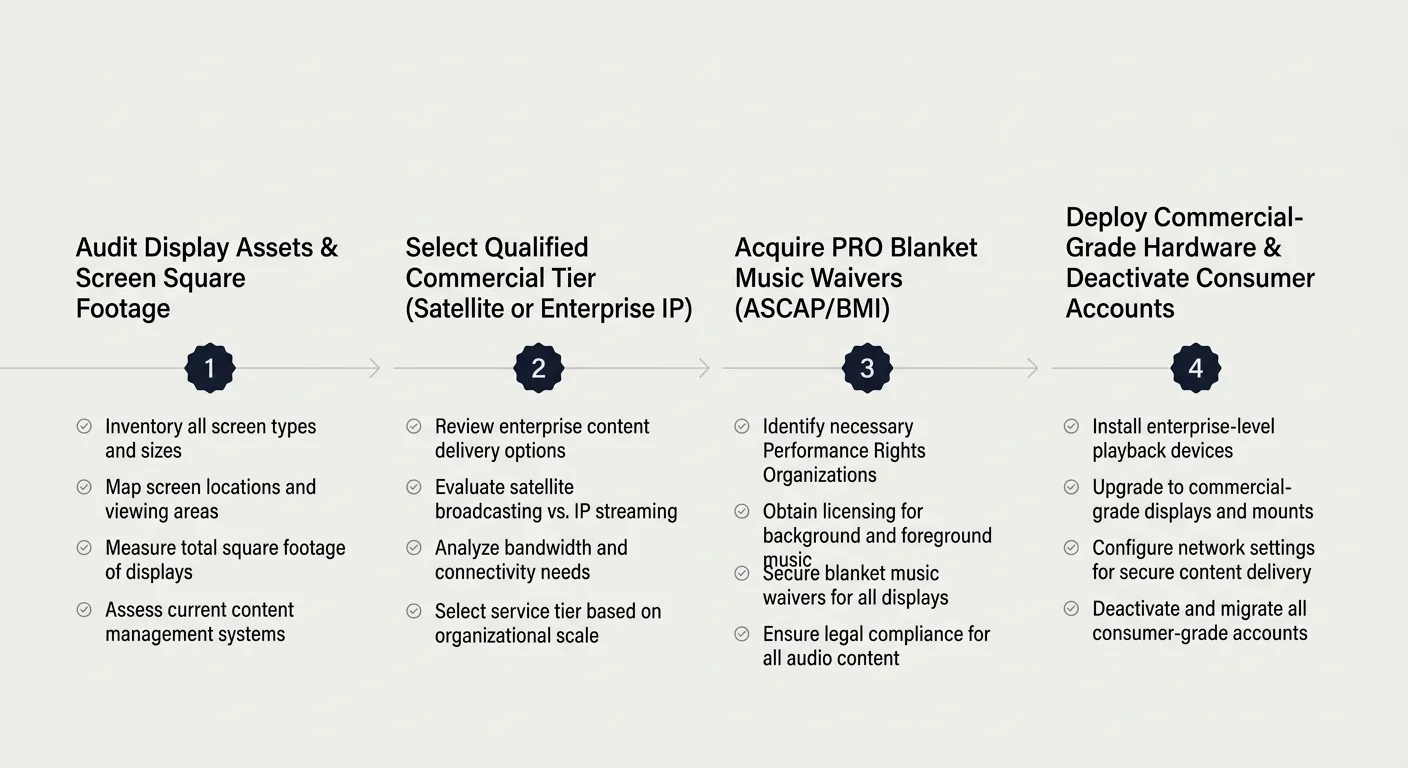
You can quickly transition your community lobby from copyright risk to full legal compliance. Follow these precise operational steps to safeguard your non-profit institution.
Organizations should also review budget-friendly legal streaming alternatives for staff break rooms, which follow different legal boundaries than public-facing gathering areas.
- Audit current screens: Measure the diagonal width of every lobby screen and calculate the gross square footage of the viewing environment.
- Locate occupancy certificates: Obtain your local municipality’s official Fire Code Occupancy certificate to qualify for small-venue commercial rates.
- Gather 501(c)(3) documentation: Secure your IRS determination letter to verify non-profit eligibility for specialized business discounts.
- Disconnect residential accounts: Log out of all personal consumer streaming apps on smart televisions and remove unmanaged consumer streaming sticks.
- Establish commercial service: Contact a dedicated commercial distributor like DIRECTV for Business or EverPass Media to order licensed commercial reception hardware.
Frequently Asked Questions
Can a non-profit community center use a personal Netflix or Prime Video account in a youth lounge?
No. Both Netflix and Amazon Prime Video state in their subscriber agreements that accounts remain restricted to personal, non-commercial, residential viewing. Showing these services in communal areas violates both platform contracts and copyright performance regulations.
Does muting the lobby television avoid copyright infringement?
Muting prevents music performance claims from agencies like ASCAP or BMI, but it does not protect you from video copyright infringement. The underlying visual broadcast remains protected intellectual property requiring an authorized public performance license.
What is the penalty if copyright inspectors find an unlicensed stream in our lobby?
Statutory damages under 17 U.S.C. § 504 start at $750 and reach $30,000 per program broadcast. If rights holders demonstrate that your facility intentionally circumvented commercial licensing, statutory penalties can reach up to $150,000 per work plus legal fees.
Can we show live local news using an over-the-air digital antenna legally?
Yes, provided your venue satisfies the federal homestyle exemption under 17 U.S.C. § 110(5)(B). Your lobby must remain under 2,000 gross square feet, or utilize no more than four total televisions with no individual screen exceeding 55 inches diagonally.
Disclaimer: Live TV streaming prices and channel lineups change frequently. Local channel availability varies by location. Always use the free trial to verify your local channels are included before committing. Sports blackout rules may affect some live events.