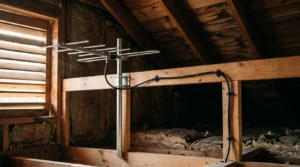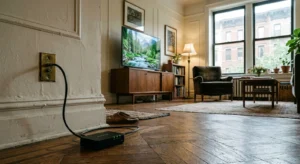
Your condo association cannot ban your outdoor television antenna or fine you for mounting it on your private balcony. Federal law overrides your Homeowners Association (HOA) aesthetic rules and architectural review committees unconditionally.
Many property managers claim exterior bylaws ban all visible hardware, yet federal regulations make those provisions completely unenforceable inside your private-use footprint.
This guide reveals the exact federal statute protecting your installation, provides a dispute letter to stop board fines, and details a drill-free mounting setup that complies with condo bylaws.

Federal Preemption: Understanding 47 C.F.R. Section 1.4000
Under the federal Over-the-Air Reception Devices (OTARD) rule, your condo board lacks the legal authority to prevent antenna placement on private balconies. Section 207 of the Telecommunications Act of 1996 established these nationwide consumer protections.
Codified under federal regulations at 47 C.F.R. § 1.4000, OTARD directly invalidates local restrictions. It explicitly preempts any conflicting community association covenants, conditions, and restrictions (CC&Rs).
Under the Supremacy Clause of the United States Constitution, federal regulations override private contracts and local HOA bylaws. When an association covenant conflicts with federal OTARD mandates, the covenant becomes legally unenforceable.
While the initial October 1996 ruling applied primarily to single-family homeowners, the Federal Communications Commission expanded the protection on January 22, 1999. That critical amendment granted identical installation rights to condo unit owners and apartment tenants.
According to the FCC Consumer Guide, these regulations prevent property associations from restricting viewers from receiving local broadcast television. The law firmly protects condo cord cutting rights against overreaching aesthetic policies.
Cord-cutting means canceling traditional cable or satellite TV in favor of streaming services. Streaming involves watching video content over the internet instead of cable or satellite.
Coupling streaming services with an over-the-air television antenna gives you free access to major network programming. You receive local CBS, NBC, ABC, and FOX broadcasts without paying monthly cable distribution fees.
In January 2021, the FCC updated OTARD through Order 21-10. This amendment extended protections to hub and relay antennas supporting fixed-wireless internet access.
Consequently, federal policy prioritizes your access to independent communications infrastructure over community aesthetic uniformity. If an HOA board attempts to fine you for a compliant balcony antenna, the board violates federal administrative law.

Exclusive Use Areas vs. Common Elements in Condominiums
To exercise OTARD protection successfully, you must install your television antenna within your designated exclusive-use area. In a condominium setting, exclusive-use property typically includes your private balcony, patio, terrace, or deck.
Exclusive use means you hold legal contractual authority over entry and physical control within that space. Your association cannot impose aesthetic bans or blanket hardware prohibitions within that private footprint.
However, federal protections stop at the physical boundary of your balcony railing. You cannot hang an antenna over the railing edge into shared exterior airspace.
Common elements include structural exterior brick walls, shared roofs, building facades, and shared breezeways. Your association retains complete legal authority to prohibit antennas mounted directly on those shared surfaces.
Drilling through exterior walls also breaches common property covenants in most condominium master deeds. You must route your antenna signal wiring indoors without penetrating or damaging shared structural components.
Broadcast television antennas carry no federal size limits under OTARD when designed to receive local television signals. Conversely, direct broadcast satellite dishes cannot exceed one meter (39.37 inches) in diameter.
Antenna masts extending more than 12 feet above a roofline may require local building permits for structural stability. However, typical condo balcony installations sit well below that 12-foot threshold.
You must also recognize device exclusions under the regulation. OTARD explicitly excludes amateur HAM radio, commercial AM/FM radio, CB radio, and satellite digital audio radio equipment from protection.
“A condo association cannot enforce aesthetic guidelines that impair reception, impose unreasonable costs, or delay antenna installation within exclusive-use areas.” — 47 C.F.R. § 1.4000
The Three Prohibited Restrictions That Nullify HOA Fines
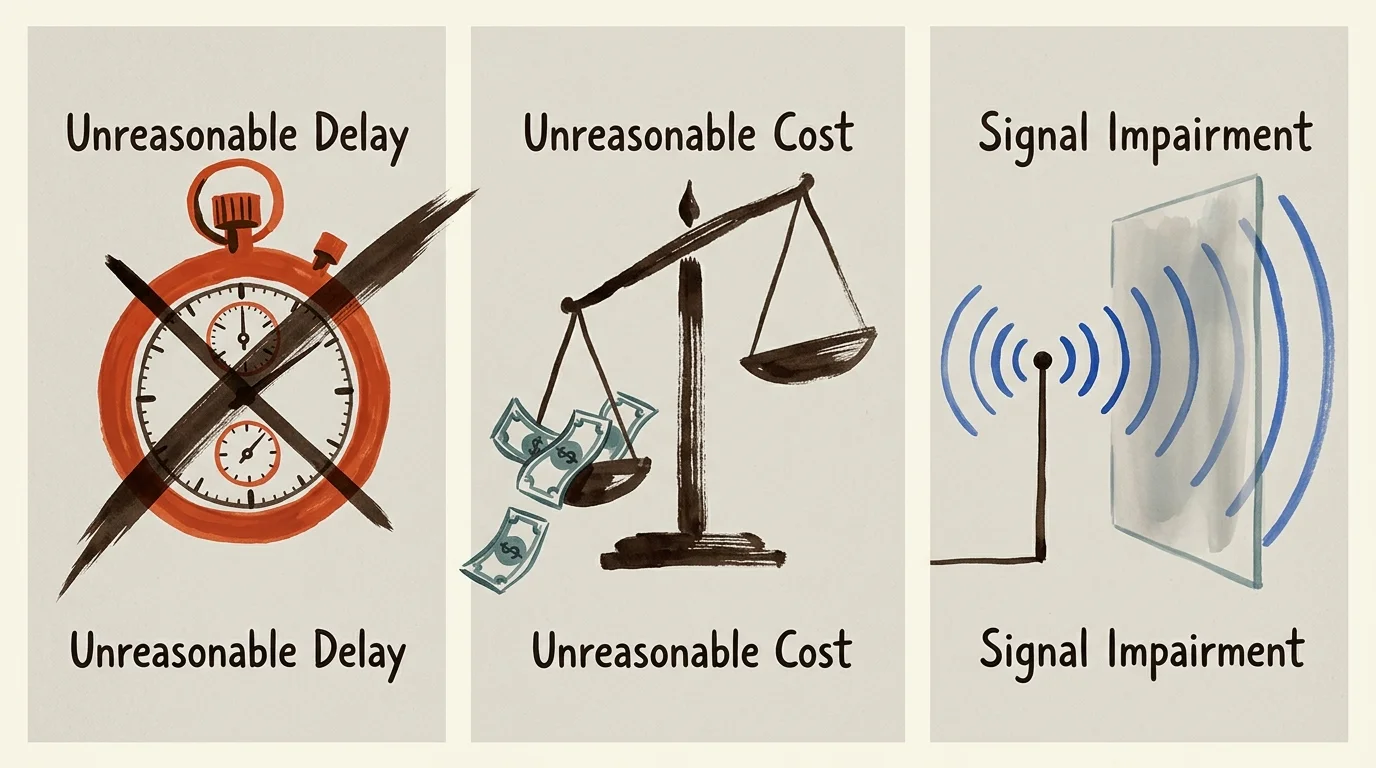
The FCC invalidates any condo association regulation that violates three statutory tests. If your property manager cites bylaws matching any of these criteria, the association’s enforcement action is void.
First, an HOA rule cannot unreasonably delay or prevent antenna installation, maintenance, or use. Requiring prior architectural review board approval that stalls your setup for weeks represents an unlawful delay.
Second, the association cannot enforce policies that unreasonably increase your installation, maintenance, or equipment costs. Mandating expensive visual screens, architectural application fees, or professional engineering diagrams violates federal law.
Third, condo rules cannot preclude the reception of an acceptable quality television signal. If the board demands you place an antenna where concrete walls block broadcast signals, that demand is unlawful.
Condominium boards may only enforce restrictions rooted in verified, legitimate safety concerns. These safety rules must appear in written association documents and apply equally to all external items.
For instance, preventing equipment from hanging dangerously close to utility power lines is a valid safety enforcement. Similarly, requiring secure mounting against high-wind fall hazards complies with federal safety standards.
Historic preservation exemptions provide another narrow carve-out for associations. If your building appears on the National Register of Historic Places, preservation rules can restrict exterior hardware placement.
Outside of safety and historic preservation, condo boards possess zero regulatory power to block your antenna. Understanding these three statutory prohibitions gives you complete leverage when defending your setup.
Drill-Free Balcony Antenna Hardware and Mounting Setup
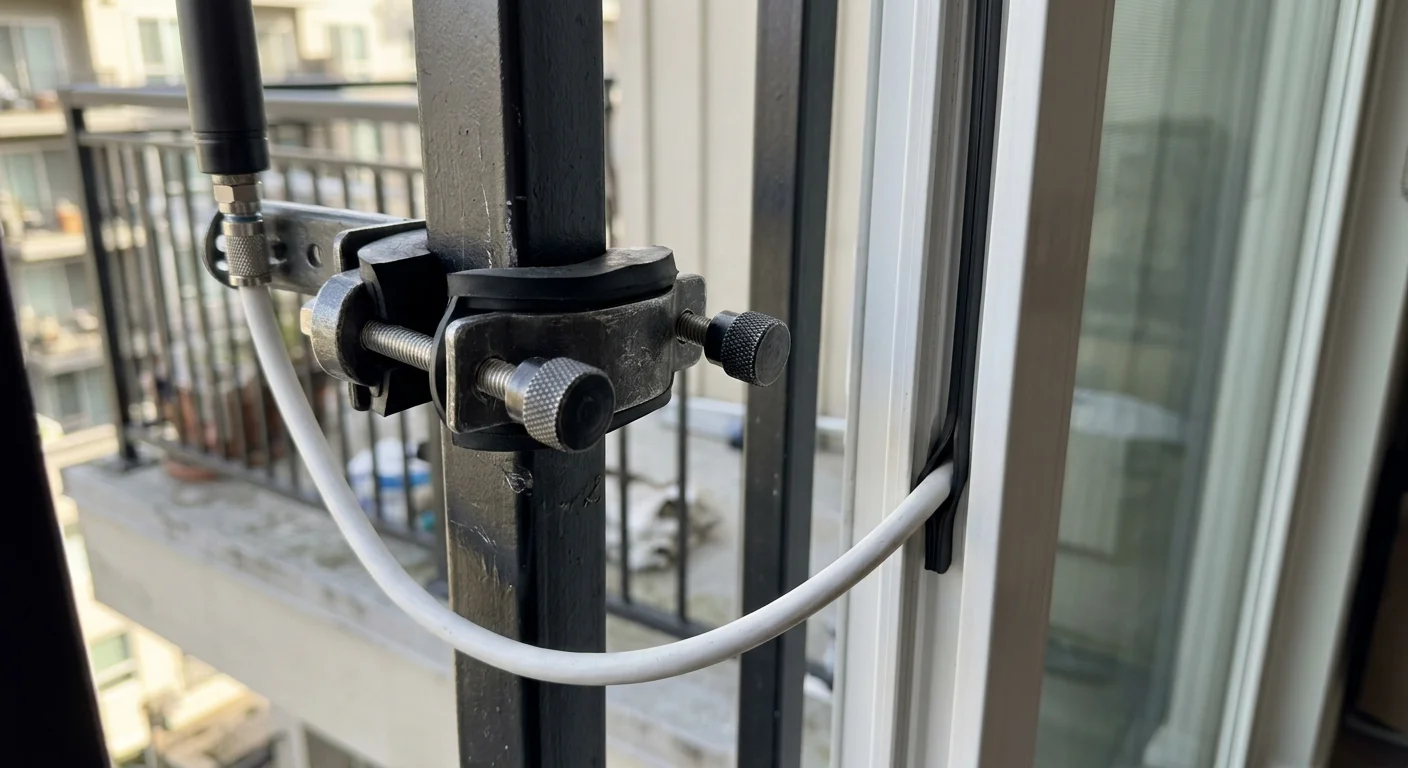
You can build a reliable outdoor antenna setup on your balcony without violating common-element rules or drilling a single hole. Using clamping hardware keeps the entire assembly inside your exclusive property boundary.
Consider a worked scenario from a condo owner in downtown Chicago living on the fourth floor. The owner installed an Antennas Direct ClearStream 2MAX antenna measuring 17.4 by 31.3 inches, purchased for $79.99.
Rather than drilling into the building’s exterior brick facade, the owner attached a Monoprice heavy-duty railing clamp mount costing $24.50. The bracket clamped firmly to the interior metal balcony post.
To route the signal indoors without drilling, they installed an 8-inch flat coaxial window jumper ribbon cable priced at $9.95. A 25-foot RG6 quad-shield coaxial cable costing $14.99 completed the physical run.
The owner connected the cable to a SiliconDust HDHomeRun Flex 4K network tuner priced at $199.99. The tuner plugged straight into their home Wi-Fi router via an Ethernet cable.
According to hardware evaluations from Wirecutter, network tuners seamlessly distribute broadcast television across your local wireless network. This design eliminates running coaxial cables across interior living room floors.
You view broadcasts on a smart TV, which is a television with built-in internet connection and apps. Alternatively, you can connect a streaming device, which is a small box or stick that adds streaming to any TV.
The owner configured digital recording capabilities using an existing external USB hard drive. A DVR, or digital video recorder, lets you record and watch shows later.
The total hardware expenditure reached $329.42. The setup unlocked 58 uncompressed broadcast channels, including local CBS, NBC, ABC, FOX, and PBS affiliates located 18 air miles away.
- Antennas Direct ClearStream 2MAX multi-directional outdoor antenna: $79.99
- Monoprice heavy-duty railing clamp bracket: $24.50
- Flat coax window jumper pass-through ribbon cable (8-inch): $9.95
- Monoprice RG6 quad-shield coaxial cable (25-foot): $14.99
- SiliconDust HDHomeRun Flex 4K network tuner: $199.99
This hardware configuration adheres 100% to condo association bylaws. The assembly causes zero structural modification and remains entirely inside the interior perimeter of the balcony railing.

Cable vs. Balcony Antenna and Streaming Cost Comparison
Transitioning from traditional cable TV packages to a balcony antenna setup creates significant recurring household savings. Most cable subscribers pay heavy recurring fees each month for broadcast channels that transmit free over the air.
As industry analyses from Cord Cutters News indicate, mandatory broadcast TV surcharges regularly exceed $25 per month on cable invoices. Those charges apply before paying for your actual programming package or rental set-top boxes.
Viewers often combine free broadcast antennas with ad-supported and ad-free entertainment services. Ad-supported platforms offer free or cheaper plans showing commercials, while ad-free options eliminate interruptions for a higher monthly fee.
Streaming plans provide on-demand programming, allowing you to watch whatever you want, whenever you want. You eliminate long-term cable contracts while preserving live broadcast sports and primetime network television.
| Viewing Configuration | Initial Hardware Outlay | Monthly Base Cost | Broadcast Surcharges | 24-Month Total Expense |
|---|---|---|---|---|
| Traditional Cable (185 Channels + 2 Boxes) | $30.00 | $115.00 | $27.50 / month | $3,450.00 |
| Live TV Streaming (YouTube TV + Internet) | $49.99 | $72.99 | $0.00 | $1,801.75 |
| Balcony Antenna + Ad-Free Streaming (Max & Hulu) | $329.42 | $33.98 | $0.00 | $1,144.94 |
| Balcony Antenna + Free Ad-Supported TV (Pluto & Tubi) | $129.43 | $0.00 | $0.00 | $129.43 |
In the worked Chicago scenario, the resident eliminated a monthly cable bill of $158.00. By investing $329.42 in antenna hardware, the owner recouped setup costs in exactly 63 days.
Over two years, the antenna and on-demand streaming combination saves $2,305.06 compared to traditional cable. Those savings accumulate without losing local NFL games, local news broadcasts, or syndicated network comedies.

Canceling Cable and Managing Broadband Requirements
Transitioning away from cable requires careful coordination with your internet service provider. Most condo residents discover their broadband connection handles streaming easily without paying for gigabit speed tiers.
High-definition streaming requires approximately 5 Mbps per screen, while 4K streaming demands 25 Mbps. A household with three simultaneous streams operates smoothly on a basic 100 Mbps or 200 Mbps broadband tier.
Before calling to cancel your cable service, check your contract end date to avoid early termination fees. Cable providers often charge $10 to $20 for each remaining month on an active agreement.
When calling your cable company, state firmly that you are moving to an antenna and standalone internet. Decline promotional bundles or promotional pricing offers designed to lock you into another multi-year contract.
Return all rented set-top boxes, remotes, and modems to a company retail center immediately. Request a physical equipment receipt showing each serial number, and retain that document for at least two years.
Cable companies frequently levy automated non-return fees ranging from $150 to $300 per box months after cancellation. Having your stamped return receipt protects you from false billing collections.
Step-by-Step Response Strategy for HOA Violation Notices
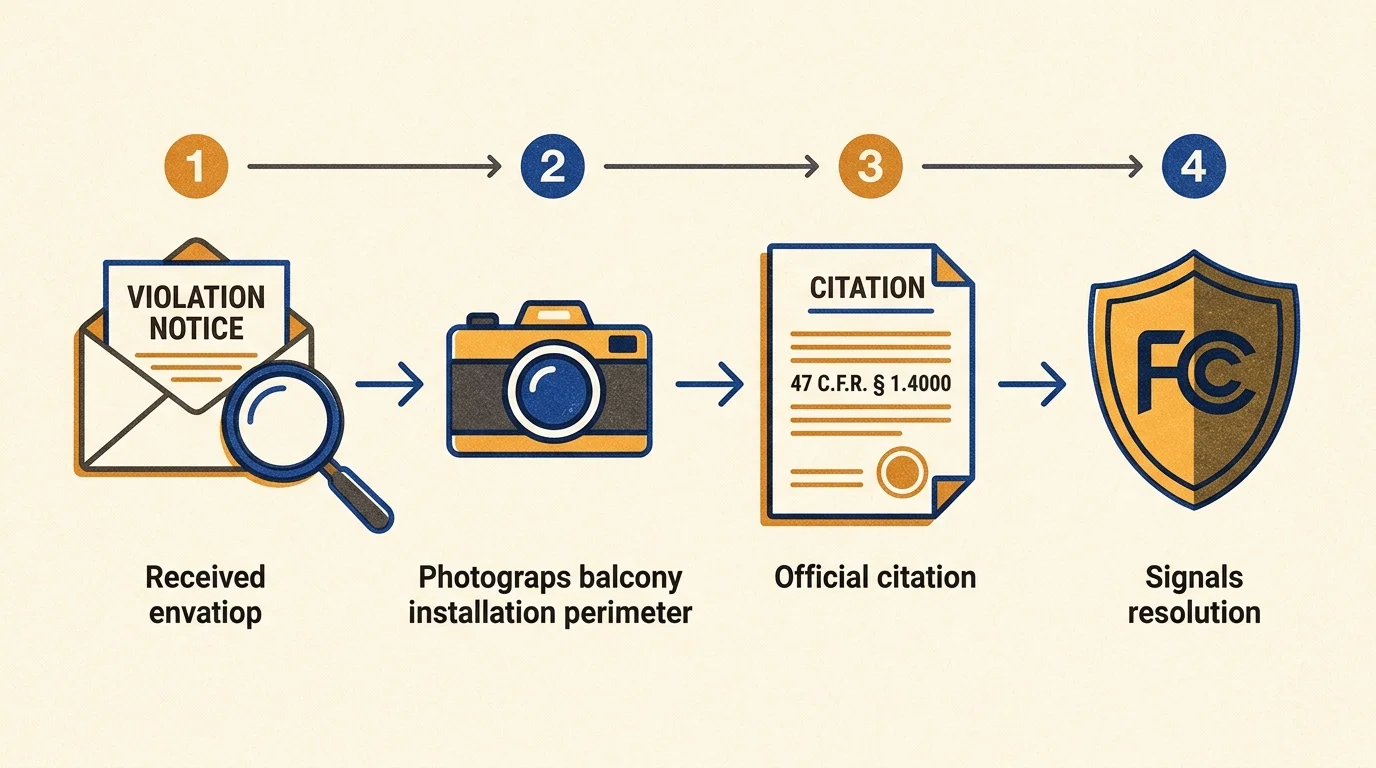
When a condo association board issues a violation notice demanding antenna removal, avoid emotional confrontations. Follow a structured administrative protocol to resolve the dispute quickly without incurring unauthorized fines.
First, audit your physical installation footprint with a tape measure and camera. Confirm that no part of the antenna mast or reflector extends past the outer vertical plane of your balcony railing.
Second, photograph your mounting clamp and flat window cable pass-through. These high-resolution images prove you did not drill into common-element brick or shared building siding.
Third, prepare a written response citing 47 C.F.R. § 1.4000 before the association’s hearing deadline. Documenting your legal stance in writing halts automatic fine escalation under standard condo enforcement procedures.
Fourth, deliver your response via certified mail with return receipt requested and send a digital copy via email. This creates an indisputable legal record that property managers cannot claim they misplaced.
Fifth, request written confirmation that the property management company has formally closed the violation file. Point out that attempting to fine a resident for protected hardware violates federal telecommunications law.
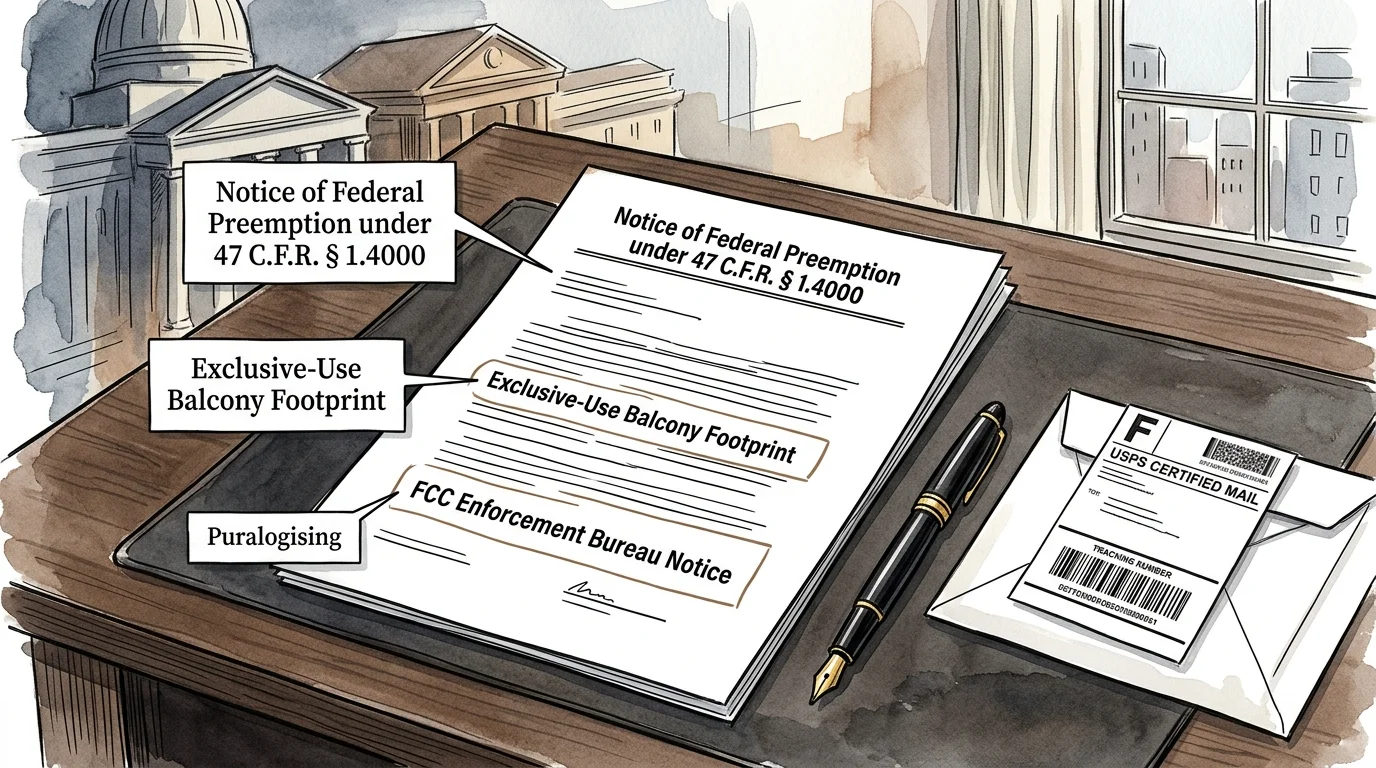
Template Response Letter for Your Property Manager and Board
Copy the template below, replace the bracketed details with your specific information, and submit it to your management office. Keep a copy in your personal records alongside photographs of your installation.
[Date]
[Property Management Company Name / HOA Board of Directors]
[Condominium Association Address]
Re: Notice of Violation for Balcony Antenna — Unit [Your Unit Number]
Dear Property Manager and Members of the Board,
I received your violation notice regarding the television antenna on my balcony. This letter serves as formal notice that my antenna is protected under federal law.
Under 47 C.F.R. § 1.4000, known as the FCC OTARD rule, community associations cannot prohibit television reception antennas installed in exclusive-use areas.
My installation sits entirely within my exclusive-use balcony perimeter and does not overhang into common airspace.
Furthermore, the bracket clamps directly to my railing without drilling into common-element masonry or exterior siding. Wiring enters via a flat window jumper ribbon cable.
The FCC explicitly prohibits association rules that delay installation, increase equipment expenses, or impair signal reception. Aesthetic bylaws cannot override federal telecommunications rules.
Attached please find photographic documentation confirming the installation remains completely inside my private balcony boundary.
Please confirm in writing within ten business days that you have rescinded this violation and closed the file.
Sincerely,
[Your Name]
Unit [Your Unit Number]
Frequently Asked Questions
Can an HOA prohibit an antenna inside my private balcony?
No. Under FCC rule 47 C.F.R. § 1.4000, your HOA cannot prohibit television reception antennas within areas under your exclusive control, including balconies and enclosed patios.
Can I drill into the condo building exterior wall to mount my antenna?
No. Exterior building walls are shared common elements in a condominium. OTARD does not grant rights to alter common property, so you should use non-damaging railing clamps instead.
Does the FCC OTARD rule cover amateur HAM radio or CB antennas?
No. OTARD protections apply specifically to broadcast television antennas, satellite dishes under one meter, and fixed-wireless antennas. HAM radio, CB radio, and commercial radio antennas are explicitly excluded.
Can the condo association require prior approval before I install an antenna?
Generally, no. The FCC considers prior architectural review procedures unlawful if they create unreasonable delays. Associations cannot require formal approval for antennas installed entirely within exclusive-use zones.
Disclaimer: Cable and streaming prices vary by location and change frequently. The cost comparisons in this article are estimates based on typical pricing. Your actual savings will depend on your current cable package, internet costs, and which streaming services you choose.