
Splitting a strict $15 monthly entertainment budget with your cinephile roommates does not mean sacrificing classic cinema and festival discoveries. Selecting the wrong platform wastes your shared cash on dormant titles while cutting your collective watchlists in half.
Streaming—watching video content over the internet instead of cable or satellite—offers deep arthouse libraries, but individual service costs quickly escalate. Combining a free public library card on Kanopy with a single paid service slashes your cost-per-film below fifty cents.
While most guides tell you to pick between Criterion Channel and MUBI, our mathematical breakdown proves that strategic platform cycling with Kanopy yields forty-five monthly screenings under your joint cap.

The $15 Cinephile Budget Framework
Post-college life forces tough trade-offs between rent, groceries, and culture. Practicing cord-cutting—canceling traditional cable or satellite TV in favor of streaming services—saves money, but specialized niche apps can quietly drain your shared bank account.
Managing shared entertainment costs across multiple housemates follows similar principles to building a structured roommate streaming syndicate that pools funds without triggering financial disputes.
Mainstream platforms like Netflix and Max have largely purged international retrospectives and independent cinema. As a result, movie buffs seeking budget arthouse movie streaming must look toward dedicated independent cinema platforms to satisfy their viewing habits.
A flat $15 monthly entertainment cap requires strict financial discipline from everyone in your apartment. Spending beyond that ceiling triggers budget deficits, while buying the wrong catalog leads to uninspired movie nights and wasted subscription fees.
On-demand viewing—letting you watch whatever you want, whenever you want—means you only extract value when the catalog matches your schedule. If a platform rotates out titles before your roommates gather on the couch, that subscription loses its practical worth.
Furthermore, paying for ad-free tiers—plans that cost more but do not show commercials—remains essential for serious film appreciation. Commercial breaks ruin delicate pacing and destroy the communal cinema experience you want to build in your living room.
Managing this budget means calculating exact per-view expenses rather than accepting flat subscription stickers. Understanding how catalog turnover rates interact with your collective viewing frequency unlocks maximum value from every dollar spent.
Kanopy: Public Library Streaming Mechanics and Ticket Limits
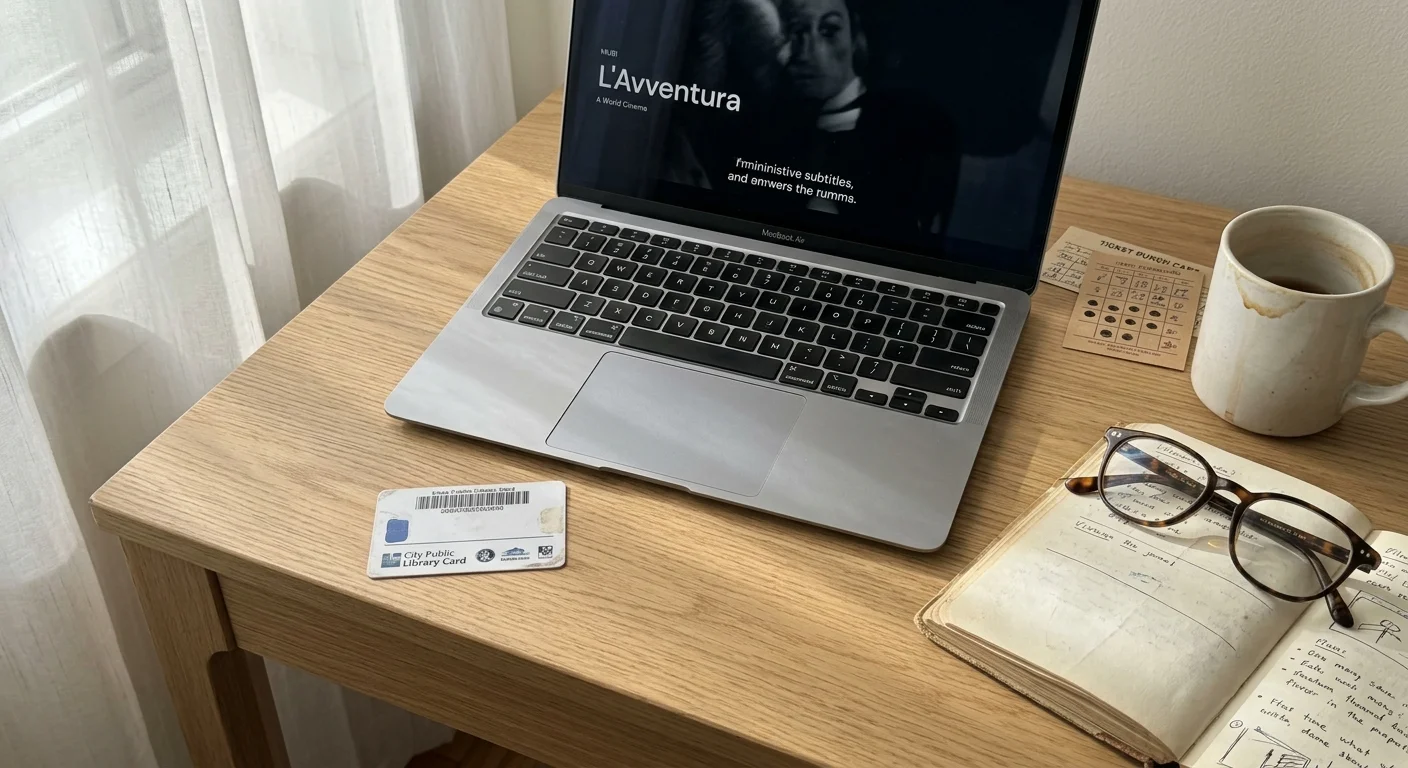
Before spending a single dollar of your shared $15 budget, your apartment must maximize Kanopy. Kanopy delivers ad-free arthouse cinema completely free by partnering directly with public library systems and university alumni networks across the country.
Alongside municipal platforms, exploring under-the-radar free streaming services can broaden your zero-cost cinematic options even further.
Unlike commercial ad-supported services—free or cheaper plans that show commercials—Kanopy is fully subsidized by public institutions. You never endure commercial interruptions, and your household owes zero dollars at the end of every billing cycle.
On November 1, 2023, Kanopy replaced its legacy play-credit system with a dynamic ticket allocation model. Most municipal library systems grant patrons between 15 and 30 tickets per user on the first day of each calendar month.
Standard feature films and major restorations from Janus Films, A24, and Kino Lorber consume two tickets each. This burn rate yields between 7 and 15 full-length feature films per cardholder every thirty days.
Short films cost one ticket, while episodic series require three to five tickets; however, select designated titles cost zero tickets. These zero-ticket selections allow unlimited streaming without depleting your monthly institutional allowance.
Your apartment holds an immense structural advantage when every roommate registers an individual library card. Four roommates holding independent cards control an aggregate monthly budget of 60 to 120 tickets.
That pooled allowance unlocks 30 to 60 feature films every month through Kanopy library streaming at a cost of exactly $0.00. Because unused tickets do not roll over, your household should exhaust these institutional allotments before tapping paid platforms.
“Public library streaming services like Kanopy offer master-tier cinema collections without subscription fees; ignoring them leaves substantial household money on the table.” — Archival Media Specialist
Kanopy’s 30,000-title catalog features substantial crossover with commercial arthouse distributors. You will routinely find historic masterpieces from Jean-Luc Godard, Agnès Varda, and Akira Kurosawa alongside modern indie breakouts without touching your credit card.

Criterion Channel: Archival Depth and Cost-Per-Screening
Criterion Channel charges $10.99 per month on a rolling subscription. That price fits comfortably beneath your $15 roommate cap, leaving an unspent monthly surplus of $4.01.
Alternatively, an annual commitment costs $99.99 per year, which equates to an effective rate of roughly $8.33 monthly. If your apartment signs a twelve-month lease, prepaying the annual plan stretches your communal entertainment dollars even further.
The platform provides an unlimited streaming model with zero watch caps, credit restrictions, or ticketing systems. You can stream continuously from its permanent catalog of more than 3,000 classic, foreign, and independent titles.
Subscribers also access over 5,000 archival bonus features, including audio commentaries, original trailers, and critical video essays. These scholarly supplements replicate the physical Criterion Collection experience without cluttering your apartment’s physical shelving.
Your cost-per-film on Criterion depends entirely on how often your apartment gathers around the screen. If your household watches four movies per month—one communal screening every weekend—your cost sits at $2.75 per film.
Bumping viewing volume to eight films monthly cuts that figure down to $1.37 per title. When roommates stream fifteen titles a month, the cost drops to $0.73 per film; thirty titles slashes it to $0.37.
Criterion refreshes curated thematic series on the first day of every month while maintaining a stable spine-number foundation. This blend of permanent masterworks and rotating specialty collections guarantees that your apartment never runs out of discussion material.
The service also offers a standard 7-day free trial for new accounts. This testing window lets your household test playback reliability and interface usability before committing any pooled roommate cash.

MUBI: Curation, Catalog Turnover, and Price Pressures
MUBI adopts a distinctly modern, festival-centric curation philosophy. While Criterion prioritizes historical cinema movements and archival restorations, MUBI highlights emerging global voices, festival winners, and bold avant-garde cinema.
Balancing single-app splurges against shared costs works best when applying proven principles on how to build a money-saving streaming bundle across your household.
Following recent price adjustments, MUBI’s standard monthly plan costs $14.99. This rate consumes virtually your entire $15 budget, leaving exactly one penny of cushion each month.
An annual membership costs $119.88 per year, which averages out to $9.99 per month. Qualifying students with verified active university email addresses can also secure the service for $9.99 monthly following an extended 30-day trial.
MUBI also promotes its MUBI GO tier at $19.99 per month, which bundles streaming with one weekly theatrical cinema ticket. However, that premium tier instantly exceeds your apartment’s hard $15 monthly limit.
Under the standard $14.99 plan, four films a month run $3.75 per screening. Eight screenings cost $1.87 each; fifteen films cost $1.00; thirty screenings cost $0.50 per film.
MUBI functions on a rapid catalog turnover rate anchored by its famous “Film of the Day” programming. While its library is smaller than Criterion’s massive archive, its curated impermanence creates genuine urgency for communal movie nights.
Evaluating Criterion Channel vs MUBI requires weighing catalog volume against premiere recency. MUBI regularly secures exclusive direct-from-festival rights that bypass physical media distribution entirely, offering films you cannot stream anywhere else.
Subscribers receive a standard 7-day free trial on the commercial tier. Testing the platform allows your roommates to determine whether its international focus aligns with your living room preferences.

Head-to-Head Comparison: Costs, Limits, and Specs
Comparing technical features reveals critical differences in how these services perform in a multi-viewer apartment. Hardware compatibility, simultaneous stream caps, and audio-video specifications directly dictate your shared living room experience.
Similar trade-offs between deep archival titles and modern restoration standards also appear when comparing niche genre platforms like Shudder, Screambox, and Arrow.
Before assessing simultaneous streams and resolution capabilities, viewers using older televisions should check how to stop 24fps film judder on Criterion Channel and MUBI to avoid distracting motion artifacts.
According to PCMag’s streaming service reviews, platform reliability and stream quality vary widely across dedicated cinephile platforms. Assessing these factors ensures you do not encounter buffering errors during peak evening screening hours.
Criterion Channel permits up to three simultaneous streams, letting roommates watch different films in separate bedrooms simultaneously. MUBI limits subscribers to two concurrent streams across five registered devices.
Kanopy enforces no strict simultaneous stream cap per account; instead, your total volume remains governed entirely by your monthly ticket budget. This allows roommates to spend tickets independently without locking each other out of the app.
Playback hardware represents another essential consideration for your living room setup. You can install native apps on a smart TV—a television with built-in internet connection and apps—or run them through external hardware.
As detailed by Consumer Reports’ streaming media device testing, dedicated external players deliver smoother navigation than aging built-in television operating systems. Using a dedicated streaming device—a small box or stick (like Roku or Fire TV) that adds streaming to any TV—guarantees stable playback.
Unlike live television packages, none of these platforms offer or require a DVR—digital video recorder, lets you record and watch shows later. Every film streams on-demand, meaning your movie nights fit your apartment’s chaotic post-grad schedules.
| Platform Option | Monthly Cost | Annual Effective Cost | Catalog Volume | Concurrent Streams | Trial Length | Cost-Per-Film (12 Screenings) |
|---|---|---|---|---|---|---|
| Kanopy (Public Library) | $0.00 | $0.00 | 30,000+ titles | Ticket-governed | Permanent Free | $0.00 |
| Criterion Channel | $10.99 | $8.33 / month | 3,000+ films | 3 streams | 7 days | $0.92 |
| MUBI (Standard) | $14.99 | $9.99 / month | 1,000+ films (rotating) | 2 streams | 7 days | $1.25 |
| MUBI (Student Plan) | $9.99 | N/A | 1,000+ films (rotating) | 2 streams | 30 days | $0.83 |
| Criterion + Kanopy Hybrid | $10.99 | $8.33 / month | 33,000+ combined | 3 paid + library | 7 days (paid) | $0.46 (at 24 films) |
This table demonstrates the financial advantage of blending municipal resources with paid subscriptions. Pairing Kanopy with Criterion Channel delivers the highest catalog density per dollar without exceeding your $15 limit.

Worked Apartment Scenario: The Roommate Screening Schedule
To understand how this math functions in reality, consider an apartment of four post-grad roommates: Alex, Sam, Jordan, and Taylor. They share a two-bedroom apartment and pool exactly $15.00 monthly ($3.75 each) into a shared entertainment envelope.
Their goal: host three communal movie nights per week (twelve monthly screenings) alongside sixteen solo watches for coursework and unwinding. That requires a reliable supply of twenty-eight films every month without incurring overage charges.
First, all four roommates register for cards at their municipal public library, each receiving 20 Kanopy tickets on the first of the month. Together, they hold 80 tickets monthly, which converts into 40 full-length feature screenings at $0.00 cost.
Next, the household subscribes to Criterion Channel on monthly billing for $10.99. This leaves $4.01 unspent from their $15 joint cash envelope, which they stash into an apartment popcorn jar.
During November, the roommates screen 12 films together on Criterion and stream 16 solo films using 32 of their 80 Kanopy tickets. They consume 28 total feature films across both services while spending only $10.99 total.
Dividing their $10.99 actual expenditure by 28 screened films yields an effective cost of just $0.39 per film. Individual roommates pay only $2.75 for the entire month, extracting premium cinematic entertainment for pocket change.
By comparison, subscribing to MUBI ($14.99) alongside Criterion ($10.99) would total $25.98 per month. That simultaneous pairing blows their $15 monthly cap by $10.98, instantly breaking their apartment agreement.
“Pooling library allocations across multiple roommates creates a massive cinematic cushion, reducing household streaming costs to fractions of a dollar per viewing.” — Media Budget Consultant
If the apartment swapped Criterion for standard MUBI ($14.99), their 28-film screening slate would cost $0.54 per title. While still affordable, MUBI leaves just $0.01 in financial buffer and provides fewer simultaneous living room streams.

The Rotation Playbook: Maximizing Arthouse Value Under $15
You do not need to lock your apartment into a single paid platform forever. According to Wirecutter’s guide to the best streaming video services, rotating subscriptions seasonally prevents library fatigue and maximizes financial efficiency.
Because Criterion and MUBI operate on month-to-month contracts without cancellation fees, you can alternate them sequentially. Keep your zero-cost Kanopy account active year-round as your continuous cinematic baseline.
Run Criterion Channel for two consecutive months ($10.99/month) to binge extensive director retrospectives and historical film noir series. Cancel Criterion at the end of the second billing cycle, retaining an accumulated cash cushion of $8.02.
Switch your paid slot to MUBI for the third month ($14.99/month) to access international festival hits and fresh festival acquisitions. This cyclical strategy grants your apartment access to both premier catalogs while keeping your three-month outlay at $36.97.
Over that ninety-day cycle, your average monthly expenditure comes out to $12.32—comfortably below your $15 roommate cap. Pairing that rotation with Kanopy ensures your television screen never goes dark when subscriptions flip.
If one roommate still possesses a verified university email account, activate MUBI’s student tier at $9.99 monthly. Under student pricing, you can run MUBI and Kanopy together while banking a massive $5.01 monthly savings.
Make sure to export your platform watchlists to an external service like Letterboxd before canceling any service. Maintaining an external viewing log prevents your roommates from losing track of curated queues between subscription cycles.
Curated Verdicts: Which Service Matches Your Apartment?
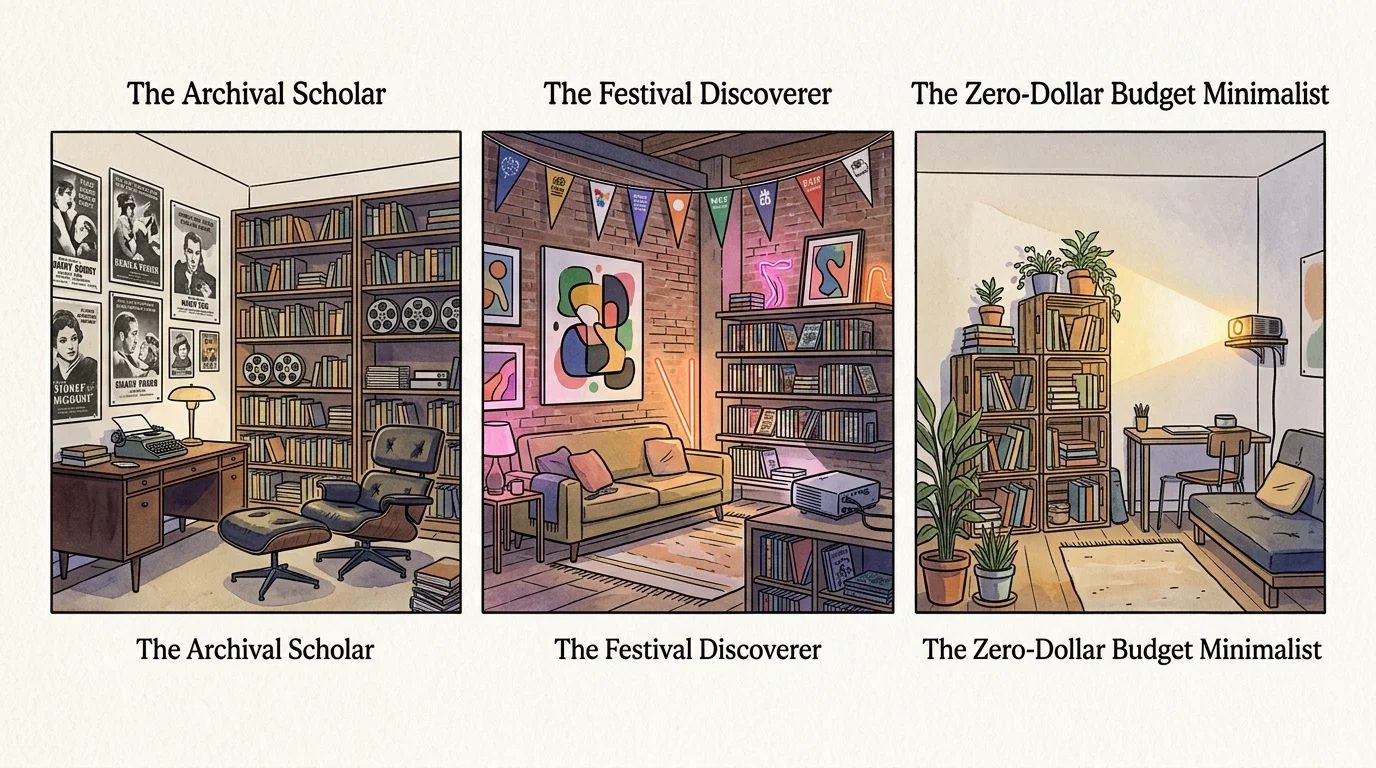
Choosing your primary paid companion to Kanopy boils down to your apartment’s specific cinematic tastes. Different viewing styles demand different catalog structures to justify your monthly contribution.
Criterion Channel is best for film history purists, cinephile study groups, and households that crave deep contextual bonus features. Its expansive Janus Films archive, audio commentaries, and comprehensive collections make it the premier choice for archival exploration.
MUBI is best for contemporary festival followers, international art-house fans, and viewers energized by rapid editorial turnover. If your roommates prefer modern European premieres and rotating gems over eighty-year-old silent classics, MUBI delivers unmatched excitement.
Kanopy stands as the mandatory foundation for all cost-conscious households. Before spending any pooled cash, exhaust your municipal library tickets on its premium Janus, A24, and independent distribution titles.
For most shared apartments on a $15 cap, the Criterion Channel plus Kanopy partnership represents the mathematical winner. It provides unlimited archival access, leaves $4.01 in cash reserves, and supports three simultaneous living room streams.
Frequently Asked Questions
Can roommates share a single Criterion Channel or MUBI account?
Yes, roommates in the same household can share login credentials across multiple devices. Criterion Channel supports up to three simultaneous streams, while MUBI allows two concurrent streams across five authorized playback devices.
How do Kanopy tickets reset, and do unused tickets roll over?
Kanopy tickets reset automatically on the first day of each calendar month at midnight institutional time. Unused tickets never roll over into the following month, so you must use your monthly allowance before it expires.
Can recent college graduates access MUBI’s student discount?
You can access MUBI’s $9.99 monthly student discount as long as your university email address remains active and verifiable. Once your institutional email credentials lapse, MUBI automatically transitions your account to the standard $14.99 monthly rate.
Which service offers the best 4K video and audio streaming quality?
MUBI provides select contemporary titles in 4K resolution with 5.1 surround sound on supported devices. Criterion Channel primarily streams in 1080p high definition to preserve original archival film grain, while Kanopy streams up to 1080p.
Disclaimer: Streaming service prices, content libraries, and features change frequently. Prices shown were accurate at time of writing but may have changed. Always verify current pricing on the official service website before subscribing.