Finding pristine, unedited Golden Age cartoons has become an exercise in frustration. Major subscription services have abandoned historical theatrical animation, leaving vintage animation enthusiasts stranded between vanished digital catalogs and scattered physical discs.
Mainstream subscription platforms have failed classic animation preservation. The uncut theatrical shorts from 1930 to 1969 have retreated entirely to specialized broadcast networks, boutique physical media restorations, and non-profit public archives.
If you want to stream unedited classic Looney Tunes, MGM, and Fleischer theatricals without paying for bloated cable bundles, specific distribution channels still deliver intact historical prints.
The Collapse of SVOD Animation: Boomerang App Shutdown and the Max Purge
Cord-cutting—canceling traditional cable or satellite TV in favor of streaming services—once promised permanent, on-demand access to Hollywood history. For classic cartoon collectors, that promise has unraveled completely.
With classic titles scattered or vanishing across platforms, learning how to find what to watch across all your streaming apps can help track down remaining vintage releases before they disappear.
Streaming refers to watching video content over the internet instead of cable or broadcast television. On-demand video lets you choose whatever title you want to watch at any specific moment.
Warner Bros. Discovery officially discontinued the standalone Boomerang streaming app on September 30, 2024. The niche service launched in April 2017 and housed thousands of vintage Hanna-Barbera, Metro-Goldwyn-Mayer, and Warner Bros. theatrical shorts.
Subscribers to the standalone Boomerang platform were migrated to an ad-free tier on Max. Ad-free plans cost more money each month but remove commercial interruptions entirely.
WBD offered migrating users a grandfathered monthly rate of $5.99 or an annual rate of $39.99 for a limited promotional window. Standard Max Ad-Free plans cost $16.99 monthly.
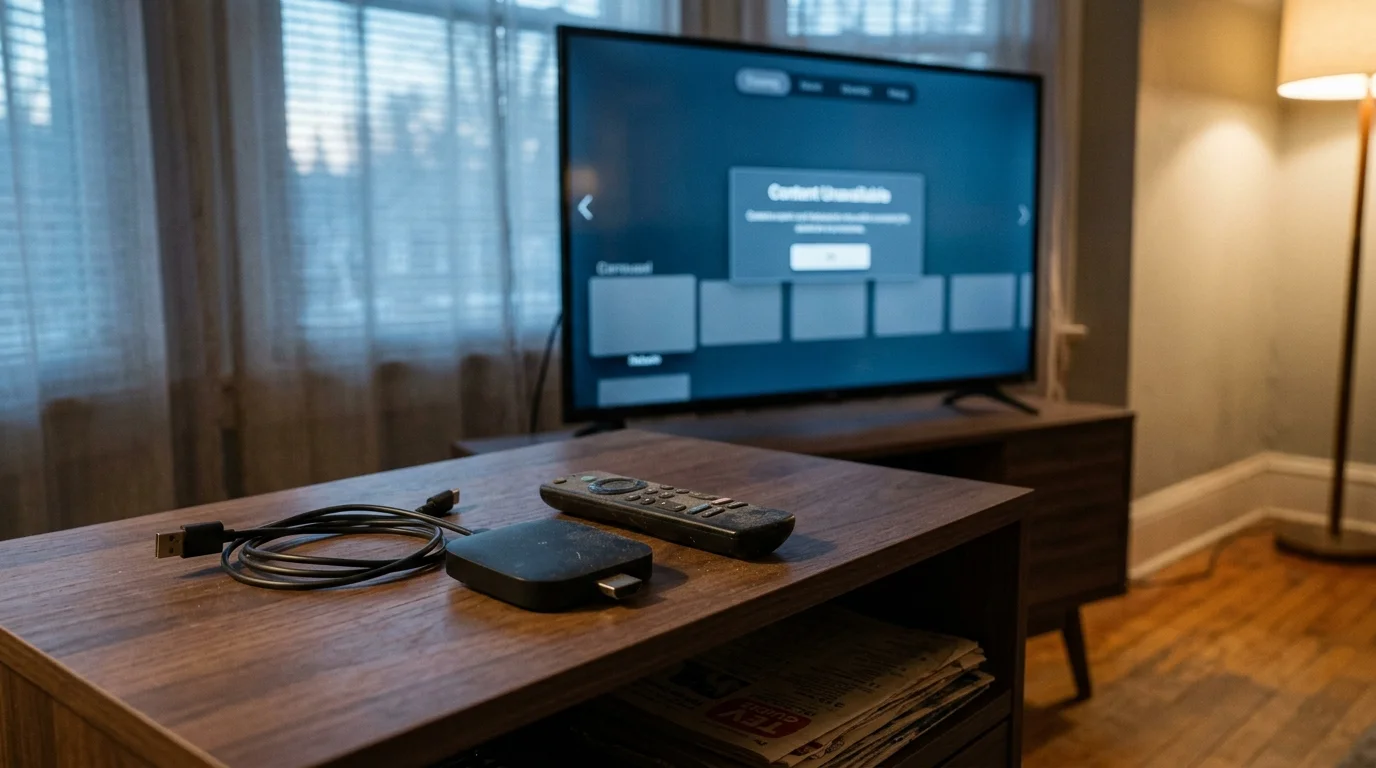
This migration proved disastrous for animation archivists. The extensive Boomerang app classic cartoons catalog did not transfer in its entirety to the flagship platform.
Instead, WBD migrated only a tiny fraction of vintage titles. Deep catalog entries like Droopy, Magilla Gorilla, and Huckleberry Hound disappeared from legitimate streaming overnight.
Corporate retrenchment escalated further in March 2025. Warner Bros. Discovery removed all original theatrical Golden Age Looney Tunes shorts produced between 1930 and 1969 from Max.
This purge concluded a phased removal campaign that began quietly in late 2022. The removal wiped out hundreds of restored historical shorts from theatrical masters.
Today, Max hosts only contemporary spinoffs and reboots like Looney Tunes Cartoons and Tiny Toons Looniversity. Mainstream subscription platforms no longer support Golden Age shorts.
“Subscription streaming services prioritize high-churn modern programming over historical preservation. Archival film libraries are treated as disposable balance-sheet liabilities rather than cultural treasures.” — Animation Historian Analysis
MeTV Toons: How Broadcast Television Rescued Classic Animation
As commercial subscription apps abandoned historical animation, broadcast television stepped in to fill the preservation void. Weigel Broadcasting launched MeTV Toons on June 25, 2024.
The shift toward linear, ad-supported broadcast subchannels aligns closely with broader trends shaping the future of streaming over the next 5 years.
Weigel partnered directly with Warner Bros. Discovery to build the 24-hour linear animation network. The channel features library assets from Warner Bros., MGM, Fleischer Studios, Universal, and Terrytoons.
Unlike standard nostalgia channels, MeTV Toons enlisted renowned animation historian Jerry Beck to consult on curation, historical context, and interstitial programming. The presentation treats theatrical shorts with scholarly care.
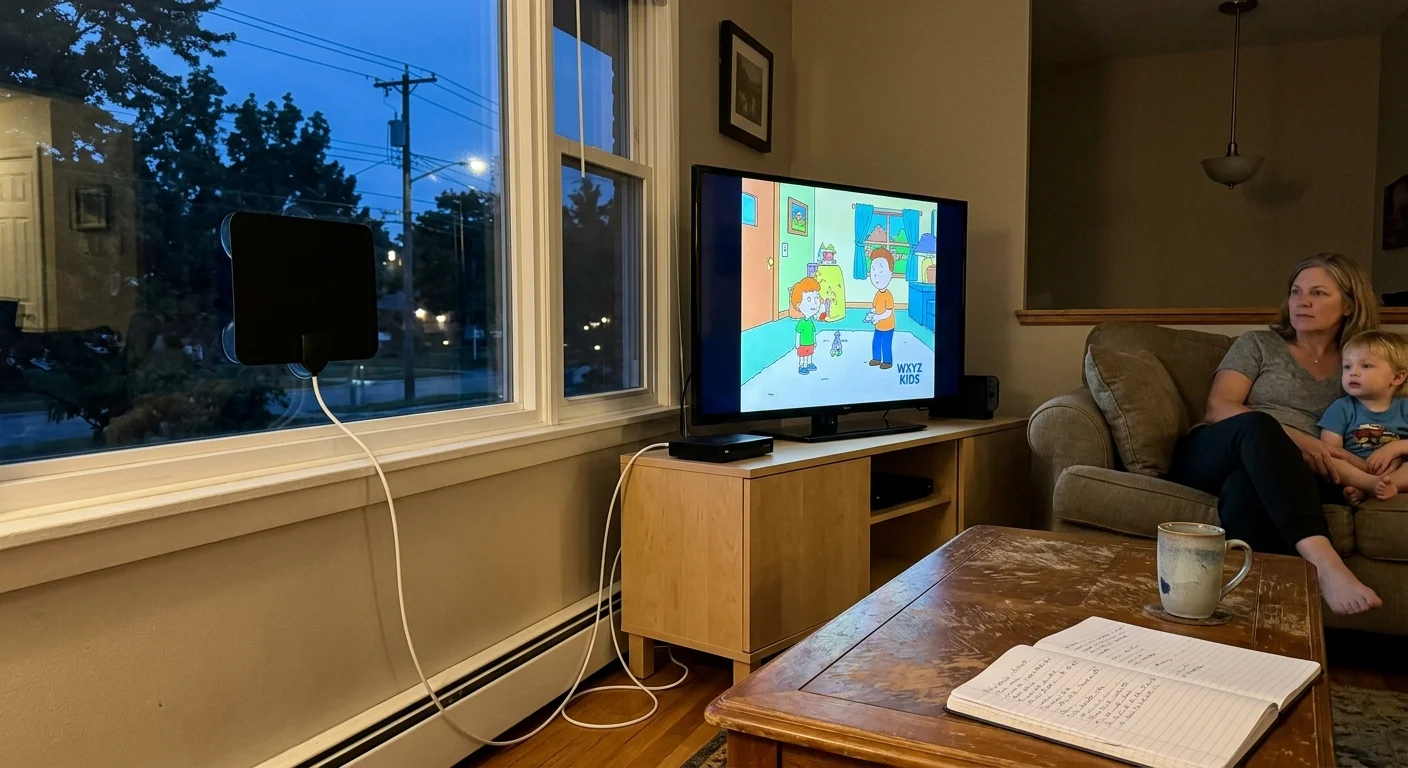
You can receive the network completely free over the air using a standard digital antenna connected to your television. The channel launched across broadcast subchannels covering over 50 percent of American households.
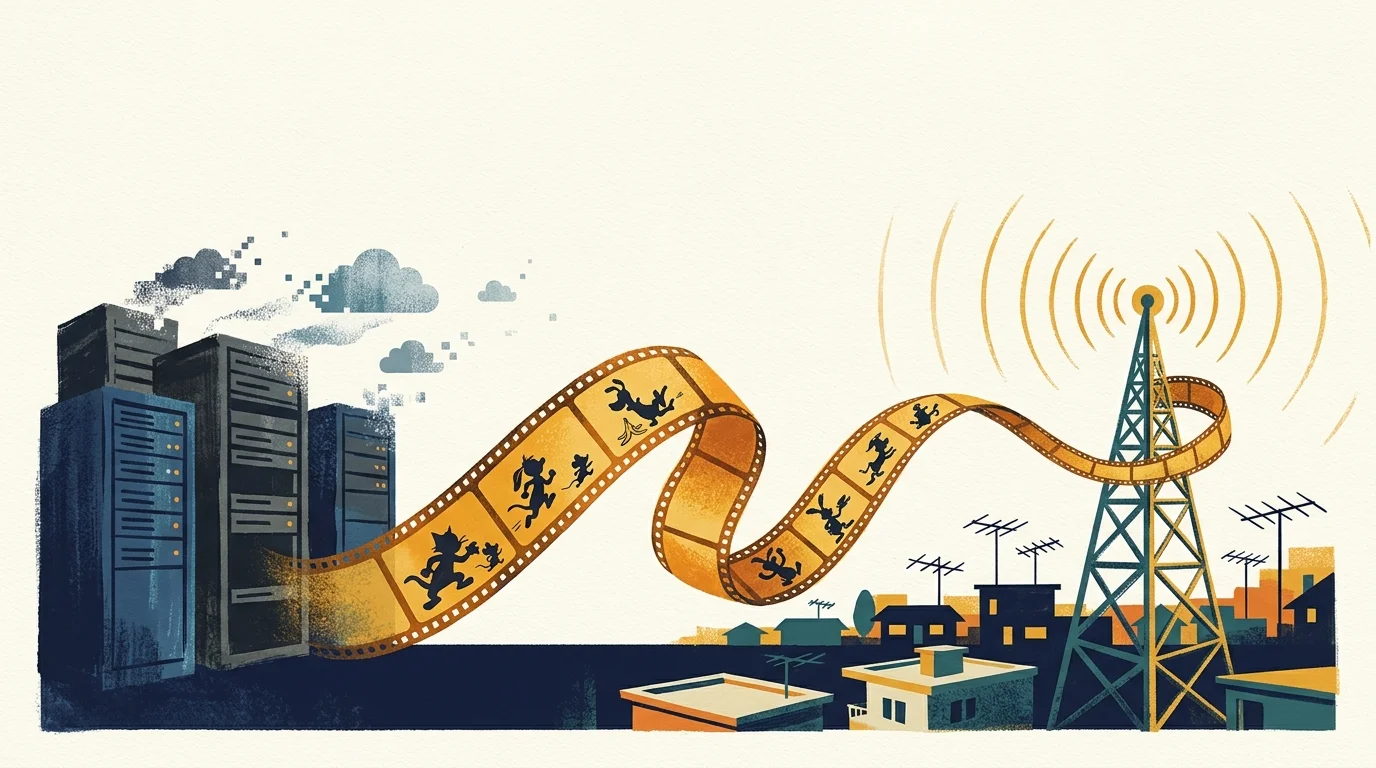
Over-the-air broadcasting transmits signals through local digital relay towers directly to indoor or outdoor antennas. This free delivery model requires zero ongoing monthly subscriptions.
MeTV Toons broadcasts daily scheduled blocks dedicated to foundational animation franchises. Viewers can watch regular broadcasts of Popeye, Casper, Woody Woodpecker, and Tom and Jerry.
The network represents the single largest daily broadcast footprint for Golden Age animation since Cartoon Network shifted programming away from theatrical shorts in the early 2000s.
How to Watch MeTV Toons Without Cable: Streaming Tiers and Hardware
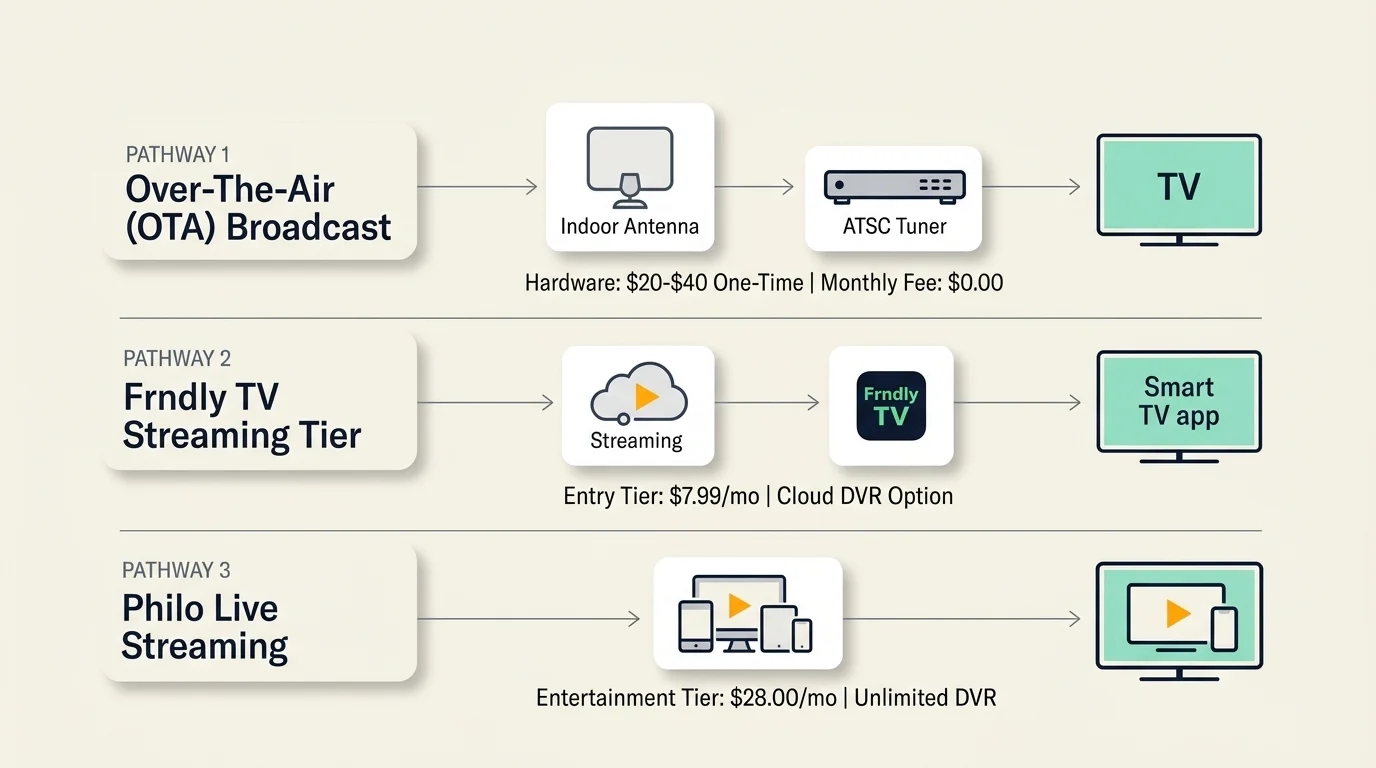
If you live outside digital antenna range or prefer watching over broadband, you can still watch MeTV Toons without cable using budget virtual distributors.
Virtual pay-TV providers deliver live channels across the internet directly to a smart TV or streaming device. A smart TV features integrated internet capabilities and digital applications.
A streaming device consists of dedicated hardware, such as an Apple TV 4K, Roku Ultra, or Amazon Fire TV Stick 4K Max. These compact devices connect directly to television HDMI inputs.
According to Consumer Reports, dedicated streaming hardware provides faster application navigation and longer software support than budget integrated smart TVs.
Frndly TV provides the most affordable method to stream the channel online. The basic plan costs $6.99 monthly and provides standard-definition video across more than 40 family networks.
The Frndly TV Classic plan costs $8.99 monthly. This tier upgrades video resolution to 720p high definition and includes an unlimited digital video recorder with three months of storage.
A DVR, or digital video recorder, lets you schedule recordings of broadcast programs to watch later at your convenience. Cloud DVR stores recordings on remote servers rather than hard drives.
The Frndly TV Premium tier costs $10.99 monthly and extends unlimited cloud DVR storage retention to nine months. It also supports four simultaneous household streams.
Philo offers a robust alternative for cord-cutters seeking a wider cable lineup alongside classic animation. Philo costs $28.00 monthly for over 70 entertainment channels.
As PCMag reports, Philo remains one of the best budget live-TV values because it includes an unlimited cloud DVR that preserves recordings for a full year.
You can pair a physical broadcast tuner with a local hard drive for an entirely subscription-free DVR system. Hardware like the Tablo 4th Gen connects to your antenna and streams throughout your home network.
Preservation Audit: Censorship, Aspect Ratios, and Restorations
Purists seeking to stream unedited classic Looney Tunes shorts must navigate significant presentation differences between broadcast channels, commercial streams, and boutique physical releases.
Commercial television networks operate under broadcast content guidelines and advertising standards. Networks routinely adjust content containing outdated social caricatures, excessive violence, or dangerous imitative behaviors.
MeTV Toons utilizes newly restored high-definition transfers supplied by Warner Bros. Discovery. Jerry Beck worked to ensure the network broadcasts the most complete versions available for commercial broadcast.
Certain shorts containing intense wartime propaganda or severe historical racial caricatures remain withheld from public television broadcasts. These withheld cartoons are known among collectors as the Censored Eleven.
Aspect ratios represent another major technical consideration for vintage enthusiasts. Golden Age animation produced prior to 1953 requires an Academy ratio of 1.37:1, displayed inside modern 4:3 frames.
MeTV Toons preserves original 4:3 aspect ratios without artificial stretching or side-cropping. Pan-and-scan cropping cuts away up to 25 percent of original hand-drawn artwork.
Broadcast video streams undergo variable digital compression. Frndly TV streams at 720p resolution, while broadcast subchannels generally output 480i standard definition or 720p MPEG-2 video.
These broadcast formats exhibit minor compression artifacts during fast-motion slapstick sequences. Discerning collectors require uncompressed physical disc scans for ultimate visual fidelity.
The Archival Solutions: Warner Archive Collection and Public Repositories
Physical home video has become the premier sanctuary for intact theatrical animation. When subscription platforms purge historical catalogs, physical optical discs maintain permanent local ownership.
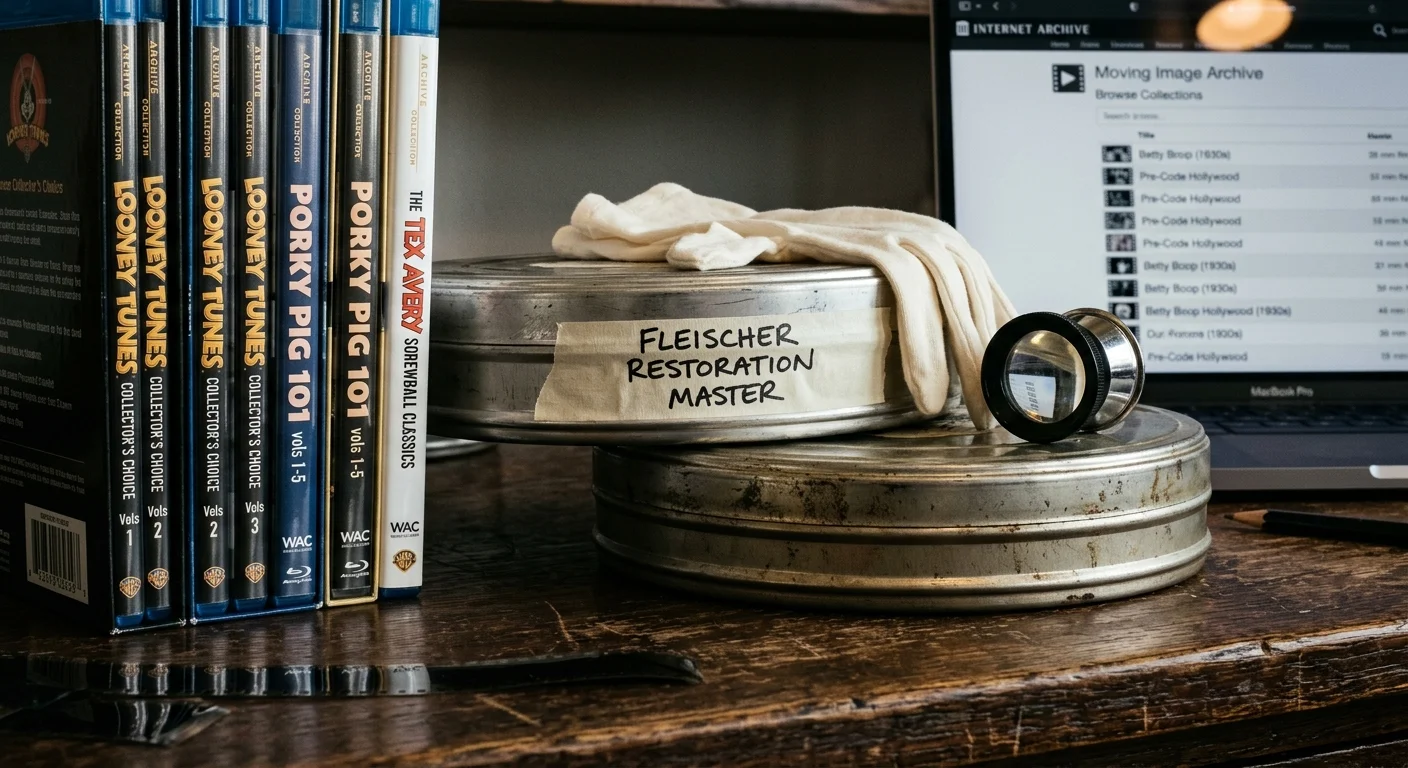
The Warner Archive Collection stands as the definitive benchmark for archival animation releases. This specialty manufacturing arm uses 4K digital restoration scans sourced straight from original nitrate camera negatives.
The Looney Tunes Collector’s Choice Blu-ray series delivers completely unedited, pristine restorations. Volumes 1 through 4 each contain 20 to 25 meticulously restored, uncensored classic shorts.
Warner Archive also released authoritative Blu-ray box sets for Tex Avery Screwball Classics and original Fleischer Popeye the Sailor cartoons. These collector releases bypass corporate streaming censorship entirely.
Public domain repositories provide another vital archive for historical animation. When copyright protection expires or historical owners fail to file statutory renewals, films enter the public domain.
The Internet Archive hosts thousands of public domain animated shorts available for legal viewing and uncompressed digital download. Non-profit digital libraries preserve these assets without subscription paywalls.
You can legally access all 17 theatrical Superman shorts produced by Fleischer Studios between 1941 and 1943 on the Internet Archive. These master scans feature remarkable Technicolor preservation.
Early 1930s Merrie Melodies, Van Beuren Rainbow Snapshots, and unrenewed Ub Iwerks ComiColor cartoons remain freely downloadable in raw, uncompressed video containers.

Platform Comparison: Availability, Costs, and Archival Integrity
Evaluating animation access requires balancing recurring subscription fees against catalog authenticity and physical hardware requirements. The following table compares modern distribution pathways.
| Platform / Service | Monthly Cost | Equipment Needed | Video Resolution | Catalog Integrity | Censorship Level |
|---|---|---|---|---|---|
| MeTV Toons (Over-the-Air) | $0.00 | Digital Antenna ($20–$60) | 480i or 720p | Expansive (WB, MGM, Fleischer, Universal) | Minimal broadcast standards edits |
| Frndly TV (Classic Tier) | $8.99 | Streaming Device or Smart TV | 720p HD | Full linear broadcast feed with cloud DVR | Standard broadcast edits apply |
| Philo | $28.00 | Streaming Device or Smart TV | 720p HD | Linear feed + 1-year unlimited DVR storage | Standard broadcast edits apply |
| Max (Ad-Free) | $16.99 | Streaming Device or Smart TV | 1080p / 4K | Modern reboots only; 1930–1969 shorts purged | Heavy catalog restrictions |
| Warner Archive Collection (Blu-ray) | $0.00 (discs ~$21.99 each) | Blu-ray Player | 1080p Uncompressed | Curated deep-catalog restoration volumes | Completely unedited and uncensored |
| Internet Archive (Public Domain) | $0.00 | Computer, Phone, or Browser | Varies (480p to 1080p raw) | Pre-1948 unrenewed historical theatricals | Completely unedited original prints |
According to Wirecutter, cord-cutters frequently overspend by maintaining overlapping subscriptions instead of deploying targeted, low-cost specialty streaming apps.
Ad-supported plans provide free or cheaper access while displaying commercials. Ad-free plans eliminate commercial interruptions entirely for a higher recurring price.
Building the Ultimate Animation Setup: A Worked Financial Example
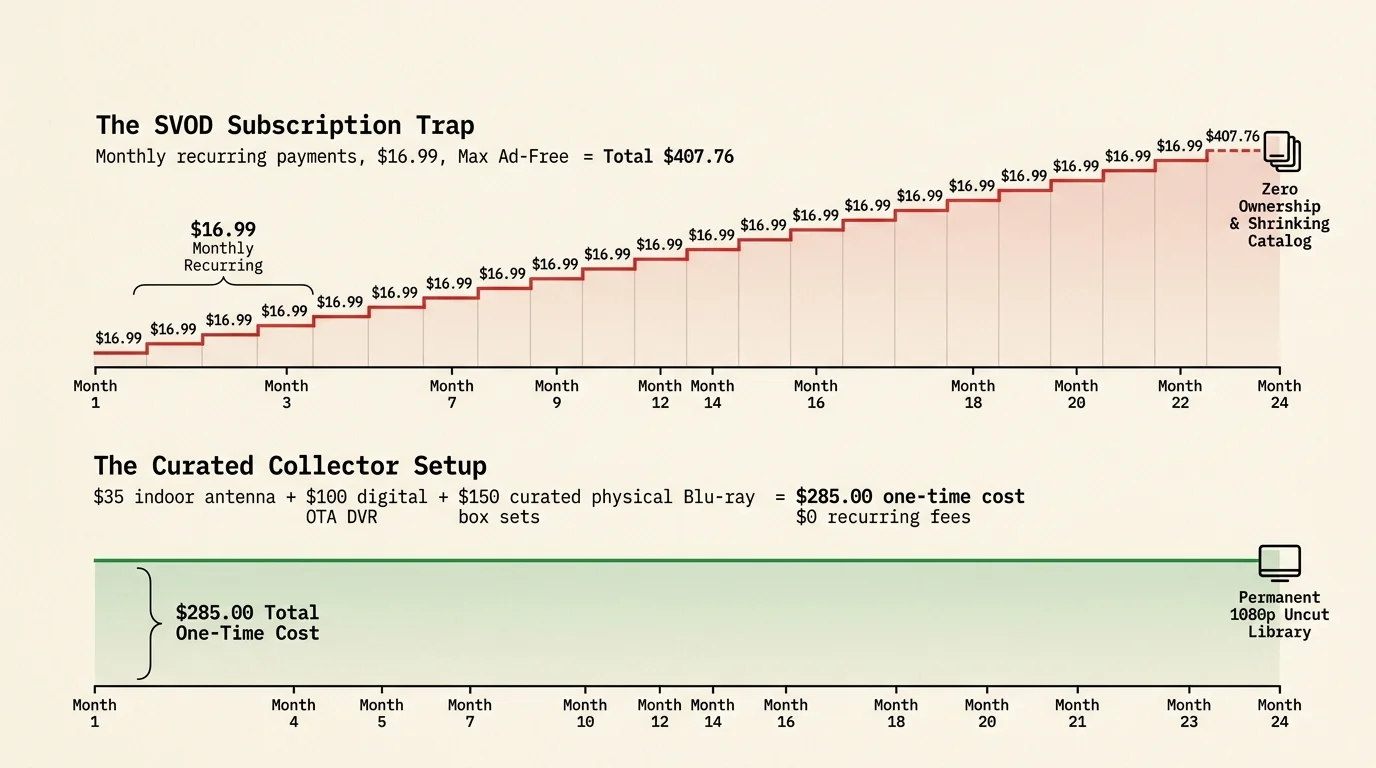
To demonstrate how you can maximize archival access while minimizing monthly expenses, consider this worked equipment and subscription scenario calculated over a 24-month horizon.
A collector seeks access to daily classic cartoon broadcasts, local high-definition recording capabilities, and uncut physical reference restorations without paying traditional cable bills.
First, purchase an Antennas Direct ClearStream 2MAX outdoor or indoor antenna for an upfront retail price of $79.99. This antenna receives UHF and VHF broadcast frequencies reliably up to 60 miles.
Second, integrate a Tablo 4th Gen 2-Tuner Over-the-Air DVR box priced at $99.99. This hardware unit requires zero subscription fees and includes 128GB of internal flash storage for local recordings.
The Tablo connects to the antenna, joins your home Wi-Fi network, and streams uncompressed digital television directly to Roku, Fire TV, or Apple TV devices throughout your residence.
Total initial hardware expenditure equals exactly $179.98. Recurring broadcast network subscription costs over 24 months equal exactly $0.00.
Third, supplement broadcast television gaps by acquiring four volumes of the Looney Tunes Collector’s Choice Blu-ray series from Warner Archive. At an average retail price of $21.99 per disc, total physical expenditure equals $87.96.
The total investment for this comprehensive archival and broadcast configuration equals $267.94 across two full years of entertainment. That averages to an operational cost of just $11.16 per month.
Compare this archival setup against a standard live-streaming alternative. Philo costs $28.00 per month, totaling $672.00 over 24 months for linear streaming without permanent physical ownership.
Subscribing to Frndly TV Classic at $8.99 monthly totals $215.76 across 24 months. While affordable, it lacks the permanent ownership and pristine bitrates provided by physical disc media.
The hybrid antenna and physical archive setup saves you hundreds of dollars over time while granting permanent access to completely uncut original transfers.
Frequently Asked Questions
Can you watch MeTV Toons on demand?
MeTV Toons operates primarily as a 24/7 linear broadcast channel rather than a standalone on-demand streaming service. You can create your own on-demand library by recording broadcast blocks using cloud DVR services like Frndly TV or local over-the-air tuners like Tablo.
Why did Warner Bros. Discovery pull classic Looney Tunes from Max?
Warner Bros. Discovery removed Golden Age shorts from Max to reduce server operating costs, avoid royalty obligations, and monetize the content through alternative distribution models. The company partnered with Weigel Broadcasting to license these shorts to MeTV Toons while marketing physical Blu-ray discs via Warner Archive.
Is the Boomerang app still available on Roku or Fire TV?
No, the standalone Boomerang app was officially decommissioned on September 30, 2024 across all platforms, including Roku, Fire TV, and Apple TV. The linear Boomerang cable television network remains active on traditional pay-TV providers, but the standalone streaming application no longer exists.
Where can you find completely uncensored Fleischer Superman cartoons?
The complete 1940s Fleischer Superman theatrical shorts are in the public domain and available to stream or download for free on the Internet Archive. Additionally, Warner Archive released an authoritative 4K digital restoration of the complete series on Blu-ray sourced directly from original Technicolor negatives.
Disclaimer: Streaming service prices, content libraries, and features change frequently. Prices shown were accurate at time of writing but may have changed. Always verify current pricing on the official service website before subscribing.