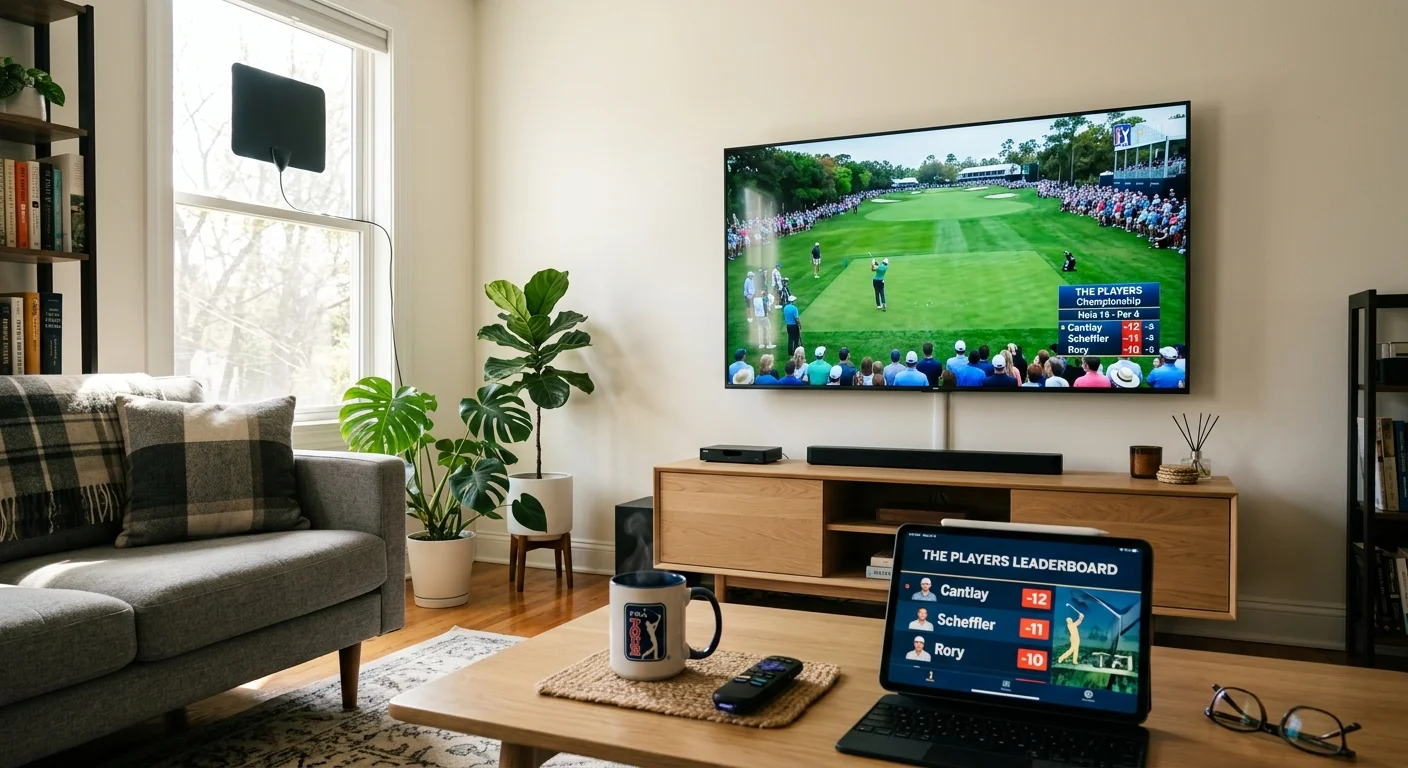
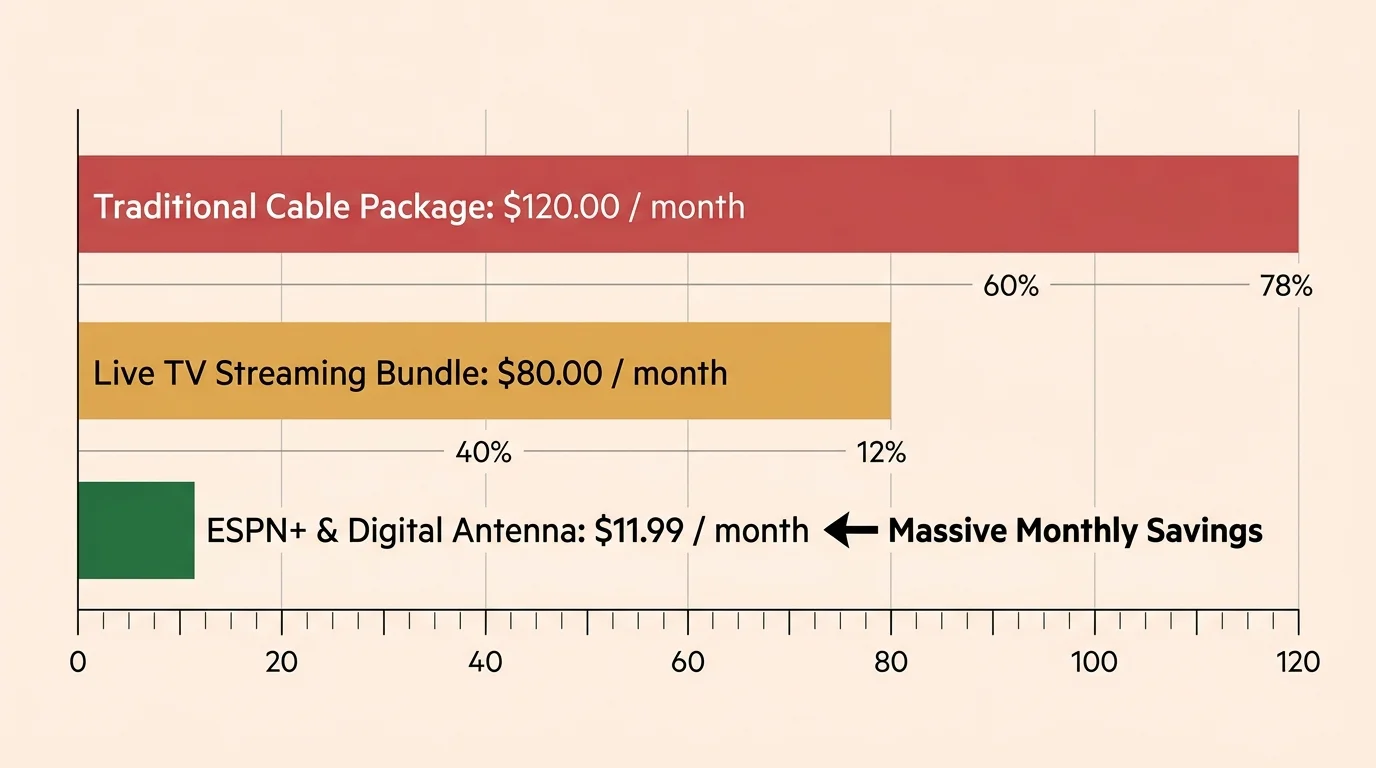
A retired couple watching the PGA Tour from a suburban home 30 to 60 miles from broadcast towers do not need an $80 monthly bundle. Pairing a digital over-the-air antenna with ESPN Select (formerly ESPN+) covers all four rounds for $13.99 per month.
Cable companies claim Golf Channel is mandatory for afternoon golf, yet canceling traditional cable or satellite TV lets you bypass it entirely. ESPN+ Featured Groups fill those exact afternoon hours until free CBS and NBC broadcasts start over the air.
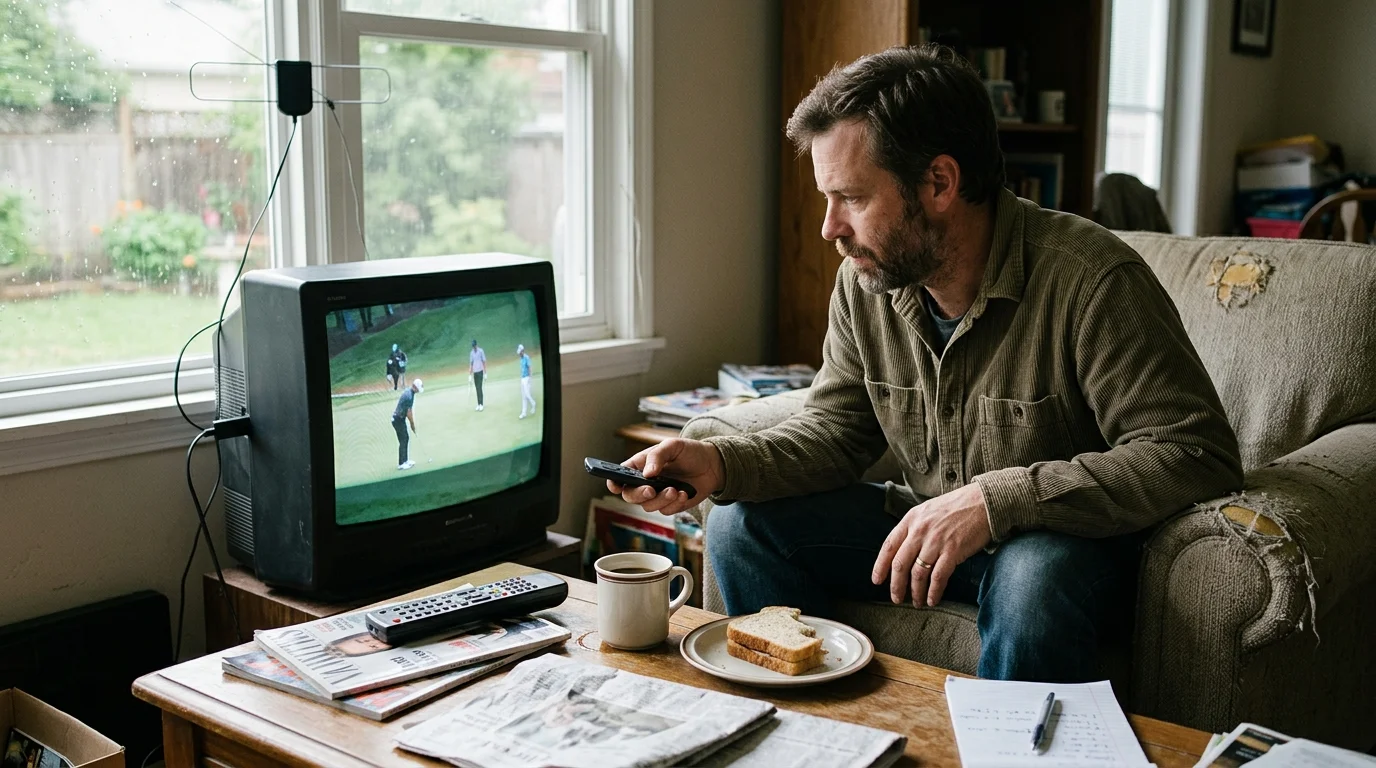
What to Buy and Sign Up For Before Setup
Start by checking your zip code on the Federal Communications Commission DTV Reception Maps website to verify line-of-sight access to local CBS and NBC towers. Confirm all hardware and streaming prices on provider pages before purchasing.
For homes 30 to 60 miles from towers, buy the ClearStream 2MAX ($79.99) for stronger UHF and VHF reception. Closer homes within 25 miles can use the Mohu Leaf 30 ($24.99) or Channel Master Flatenna 35 ($24.99).
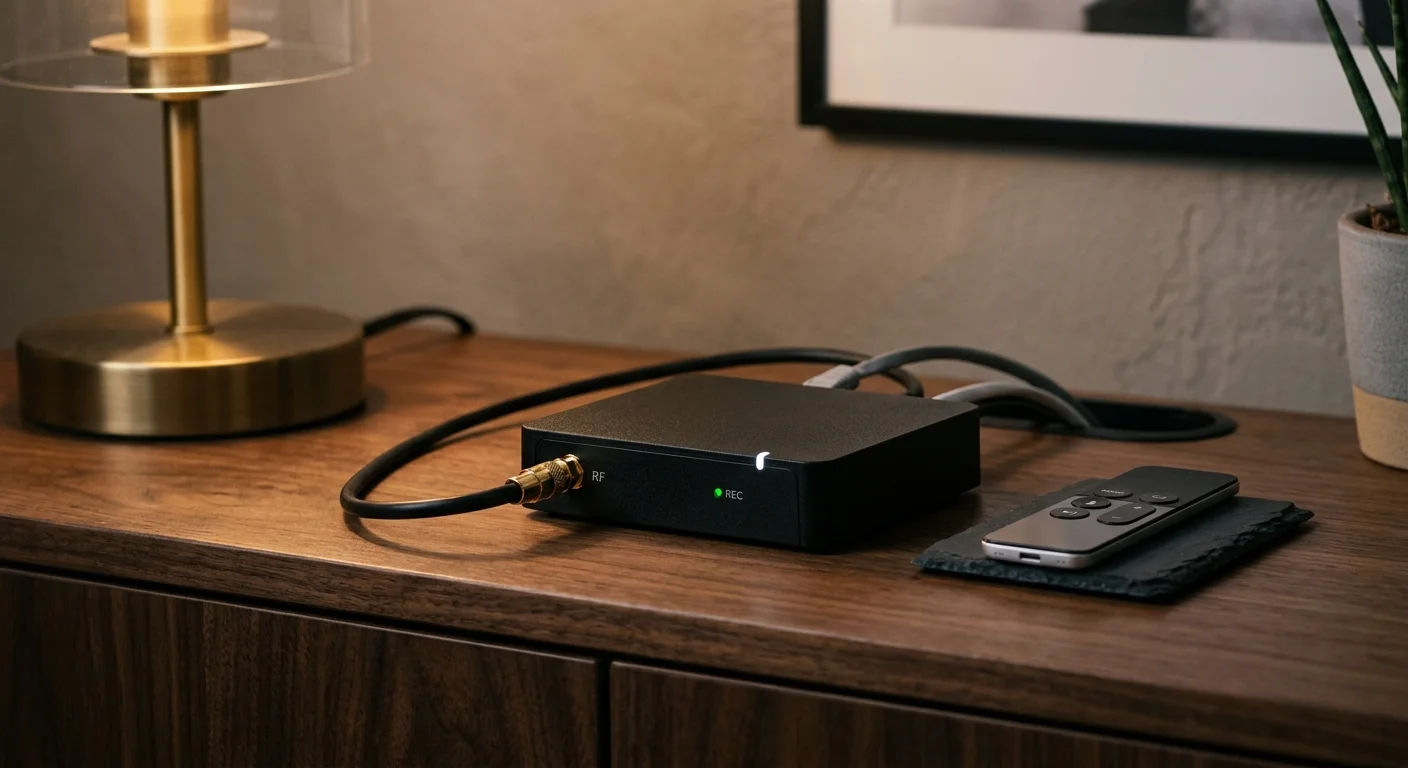
Add a Roku Streaming Stick 4K ($49.99) or Amazon Fire TV Stick 4K Max ($59.99) if your smart TV menus feel sluggish. Purchase a 2-Tuner 4th Gen Tablo ($99.95) or HDHomeRun Flex 4K ($199.99) only if you want DVR recording for weekend network golf.
Create a standalone ESPN Select (formerly ESPN+) subscription at $13.99 per month or $139.99 annually (or subscribe to ESPN Unlimited at $31.99 per month if you also need linear ESPN networks), totaling $125.91 across a nine-month season. Adding the $24.99 Flatenna 35 brings your initial season total to $150.90.
According to Tom’s Guide’s streaming analysis, sports fans pay the highest cord-cutting premiums, while Cord Cutters News notes sports fees drive bundle hikes. Sling TV Blue (starting at $45.99) plus Sports Extra ($11.00) starts at $56.99 monthly, or $512.91 over nine months, without morning feeds.
Data from CNET’s live TV streaming review shows YouTube TV’s Base Plan charges $82.99 monthly ($746.91 over nine months; or $64.99 monthly for its Sports Plan), while cable averages $125 monthly ($1,125.00 over nine months). This setup saves $596.01 versus YouTube TV’s Base Plan and $974.10 versus cable, cutting bills by 87 percent.
Positioning the Antenna and Confirming CBS and NBC on Screen
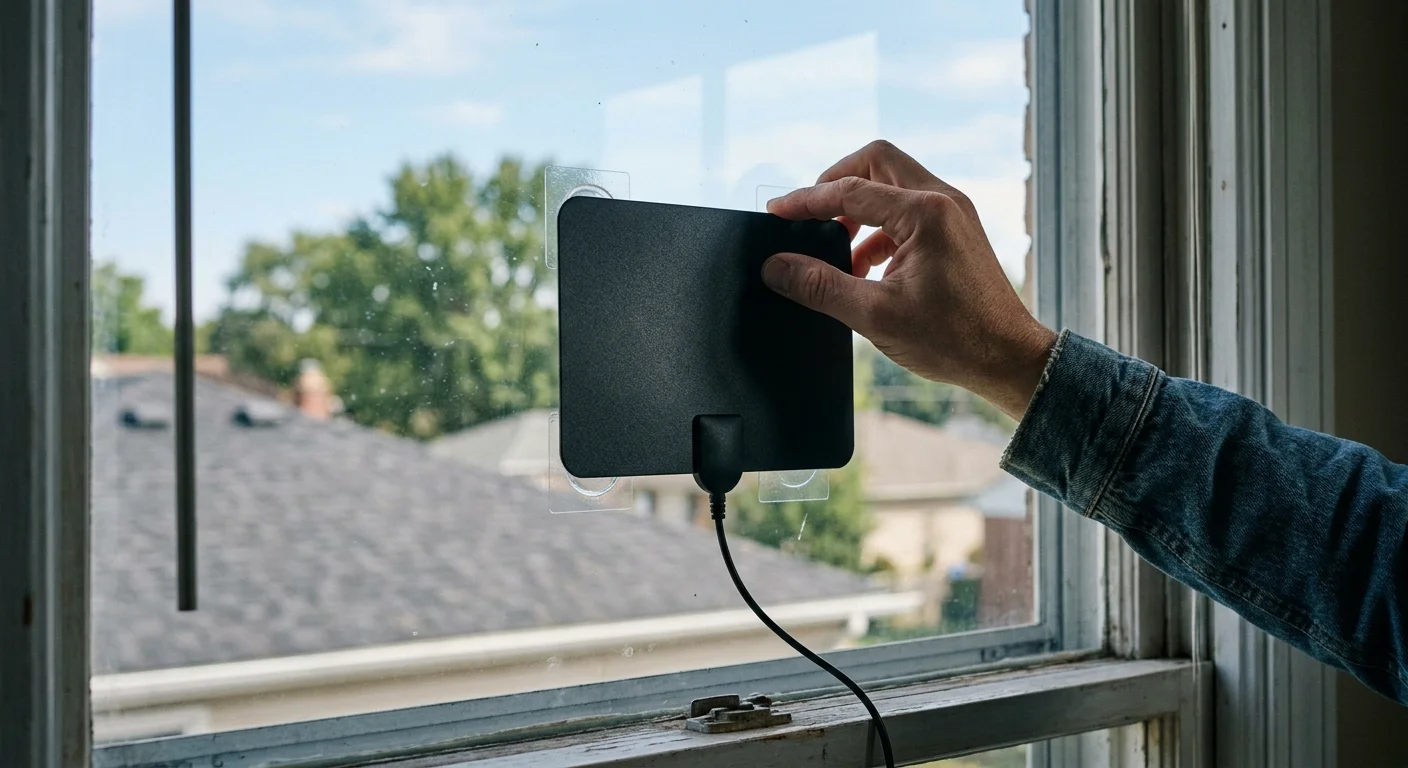
According to antenna testing by Consumer Reports, placing an antenna near an exterior window dramatically stabilizes reception and captures uncompressed high-definition video. Position your ClearStream 2MAX facing the compass bearing of your local CBS and NBC transmitters.
Connect the coaxial lead to your television’s RF tuner port, then switch the TV input to Antenna or Live TV. Open Settings, locate Channel Scan or Auto Program, and choose Air rather than Cable so the tuner checks broadcast frequencies.
Wait for the scan to finish and check your on-screen channel guide before moving on. Tune to both CBS and NBC to confirm crisp pictures, steady audio, and zero pixelation.
If CBS or NBC breaks into blocky pixels during setup, open your television’s Signal Quality meter in the Settings menu before leaving the room. Reposition the ClearStream 2MAX higher near an exterior window, inside attic rafters, or onto a balcony rail until the signal bar stabilizes.
Modern tuners receive standard ATSC 1.0 broadcasts and NextGen TV ATSC 3.0 signals offering 1080p and 4K capability with stronger multipath rejection. Rescan your television every few months if local stations adjust transmitter frequencies.
Setting Up the ESPN App and Video Output for Smooth Ball Flight
Connect your streaming stick to an HDMI port and join a 5 GHz Wi-Fi band or Ethernet adapter. Verify at least 8 megabits per second for one HD stream, or 25 megabits per second for multiple streams.
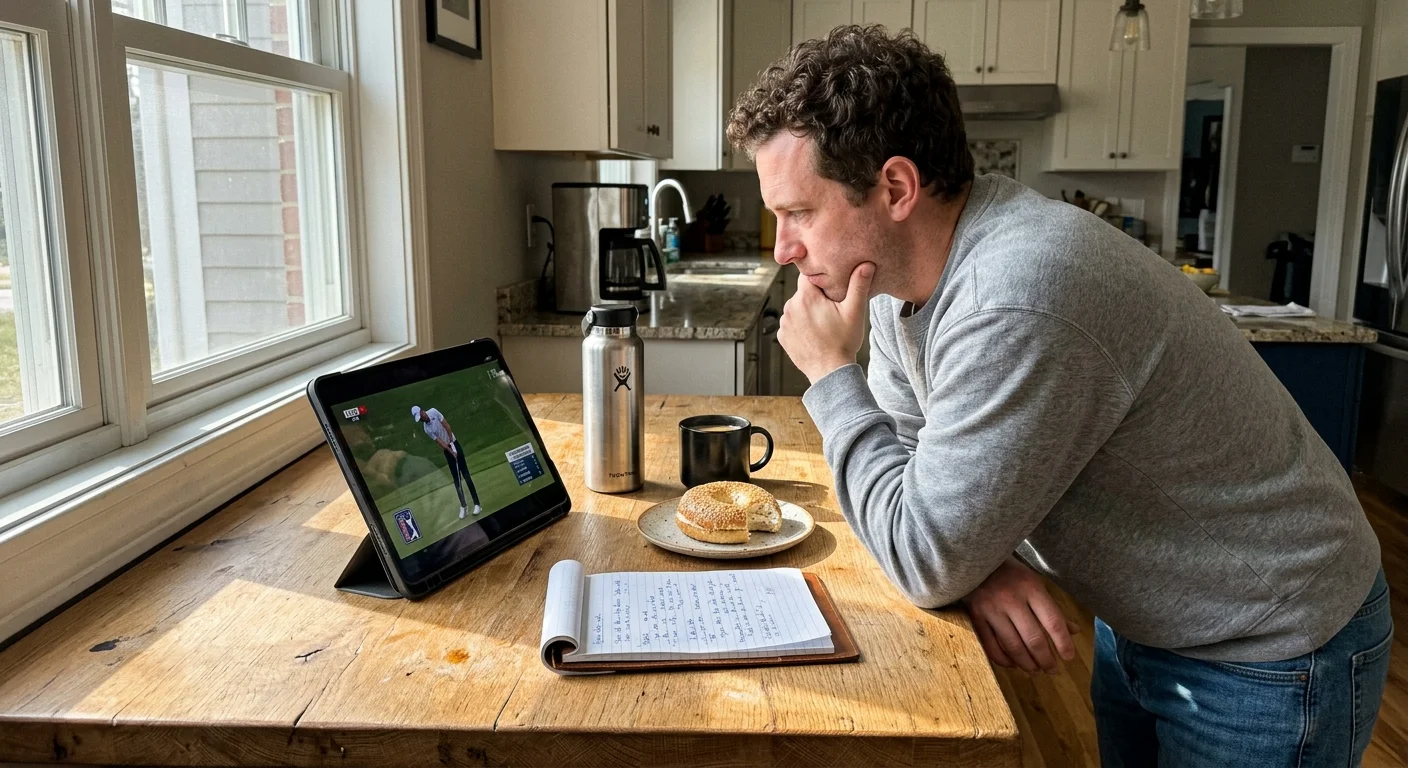
Open your device’s app store, install the ESPN application, and open its Settings menu to sign in with your $13.99 ESPN Select (formerly ESPN+) credentials. Returning to the streaming stick’s Display menu, verify output is set to 60 frames per second so ball flight stays smooth.
Open the ESPN+ tab and start a live or archived PGA Tour Live stream to test playback before tournament morning. Check on screen that video locks into crisp high definition, pauses, and rewinds cleanly without buffering.
ESPN Select (formerly ESPN+) is an ad-supported streaming tier, so expect standard commercial breaks during live broadcasts with no ad-free upgrade option. While testing your stream, confirm on screen that closed captions, audio levels, and the option to jump back to live play work from your remote.
If you use an Apple TV 4K, test Multiview inside the ESPN app to confirm it tiles up to four feeds simultaneously. Household members can also run up to three concurrent ESPN+ streams on separate screens.
ESPN+ Featured Groups vs. Golf Channel: What You Gain and Give Up
Under the PGA Tour’s nine-year media agreement running through 2030, ESPN+ streams over 4,000 live hours across more than 35 events each season. Coverage opens Thursdays through Sundays between 7:00 AM and 8:30 AM Eastern Time across four feeds.
Those four options are the Main Feed, the Marquee Group, Featured Groups, and Featured Holes, such as the 17th island green at TPC Sawgrass. Before 2:00 PM Eastern Time on weekdays, the Main Feed delivers full-course coverage and leaderboards.
At 2:00 PM Eastern Time on Thursdays and Fridays, Golf Channel takes over the exclusive linear feed until 6:00 PM. On Saturdays and Sundays, Golf Channel holds the early afternoon linear window from 1:00 PM to 3:00 PM Eastern Time.
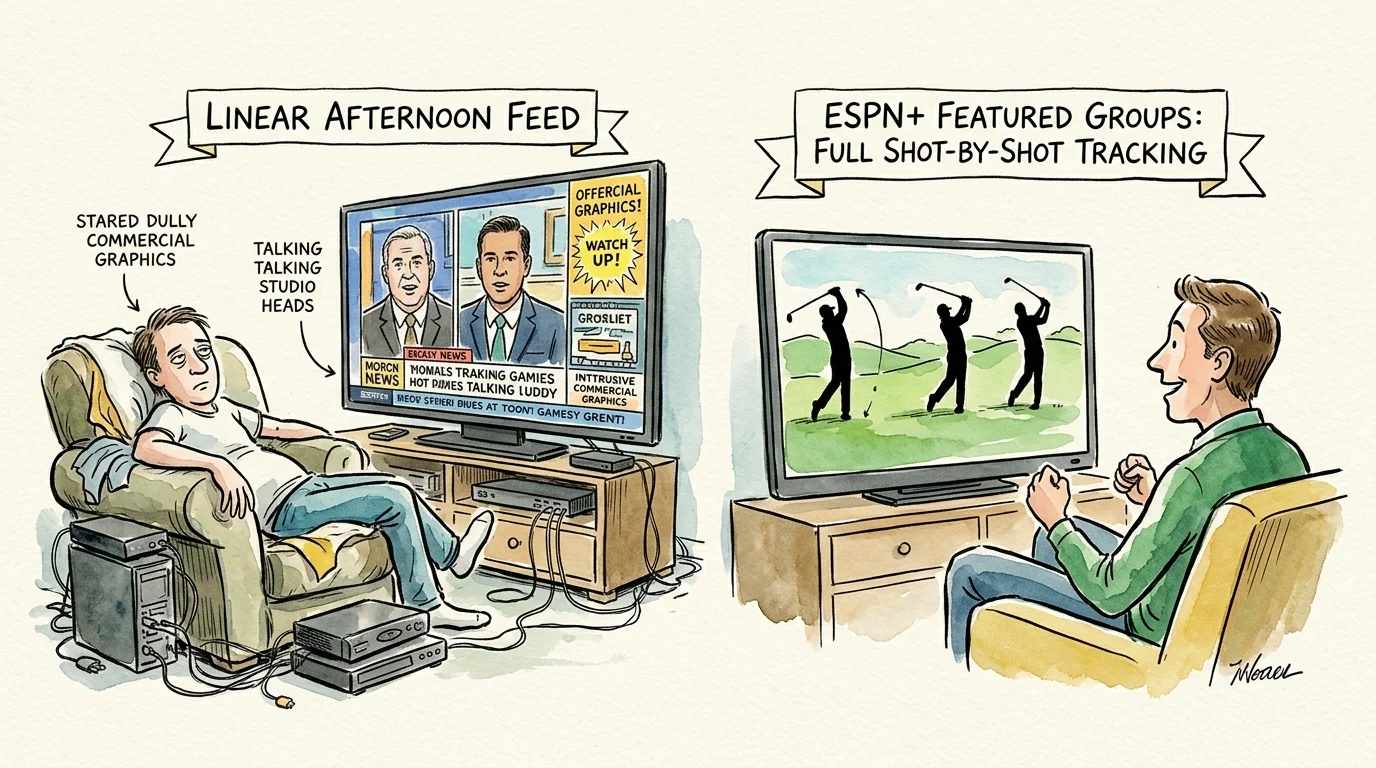
Skipping Golf Channel means giving up studio commentary, rapid cross-course cutaways, and full-field tracking during those afternoon windows. If a surprise contender outside the featured pairings surges before 3:00 PM Eastern Time on Sunday, you only track their score on the leaderboard.
In return, ESPN+ keeps Featured Groups and Featured Holes running continuously while Golf Channel airs 14 to 18 minutes of commercials per hour. You watch Scottie Scheffler or Rory McIlroy play every shot of their 18 holes and consult caddies during ad breaks.
YouTube TV viewers adding 4K pay an extra $9.99 monthly for an $836.82 nine-month bill while still missing morning featured groups. Unless you want studio analysts tracking mid-pack weekday players, ESPN+ Featured Groups deliver more actual golf shots for far less money.
Unlike regional sports networks for baseball, PGA Tour Live on ESPN+ imposes zero domestic blackout restrictions and posts full on-demand replays immediately. For a retired couple watching from home, trading studio chatter for uninterrupted shot coverage saves hundreds per season.
Handling the Weekend Network Handoff, Majors, and Playoffs
On Saturdays and Sundays, stay inside the ESPN app on your HDMI input until 3:00 PM Eastern Time. Then press Input on your television remote to switch straight to your antenna for CBS or NBC weekend finishes.
CBS carries third- and fourth-round coverage for 19 to 20 tournaments annually, while NBC airs 8 to 10 premier events including The Players Championship. Confirm your local affiliate displays smoothly each Saturday afternoon.
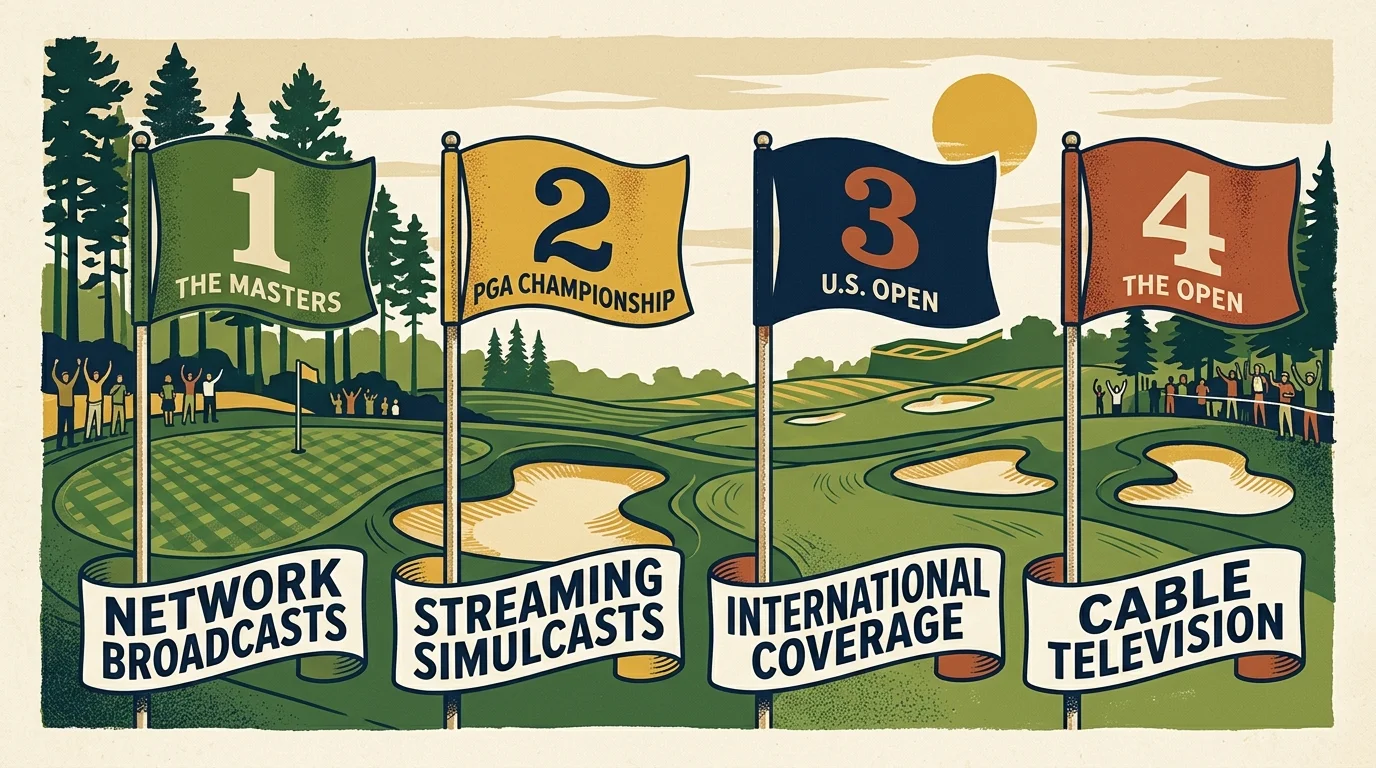
The four men’s major championships and the FedExCup Playoffs operate outside standard weekly contracts, so use this checklist across the calendar:
- The Masters: Stream every shot, Amen Corner, and featured groups free via Masters.com and the official Masters app, then switch to your CBS antenna feed for weekend finishes (Thursday and Friday linear windows air on ESPN).
- PGA Championship: Watch early morning coverage on ESPN+, then switch to your local CBS affiliate over the air for third- and fourth-round weekend broadcasts.
- U.S. Open and The Open Championship: Watch premier weekend coverage free on NBC via your antenna, and subscribe to Peacock Premium for one month at $12.99 (avoid the $8.99/month Peacock Select tier, which excludes live sports) for early weekday play on USA Network and Peacock before canceling immediately.
- FedExCup Playoffs: Track the top 70 at the FedEx St. Jude Championship, top 50 at the BMW Championship, and top 30 at the Tour Championship through 2030 via your antenna as weekend coverage alternates annually between CBS and NBC.
Disclaimer: Live TV streaming prices and channel lineups change frequently. Local channel availability varies by location. Always use the free trial to verify your local channels are included before committing. Sports blackout rules may affect some live events.