
It’s the bottom of the ninth, fourth quarter, or stoppage time. Your team is playing, but you cut the cord months ago, and you realize you don’t have access to the channel broadcasting the game. In a moment of desperation, you turn to a search engine. You find a link promising a free, high-definition stream of the event. You click it.
We have all been there. With the fragmentation of sports rights across different services like Amazon Prime, Peacock, ESPN+, and traditional cable networks, watching your favorite team has become an expensive puzzle. The temptation to use “unofficial” or “grey market” streaming sites is higher than ever. But before you click that play button, you need to understand what you are actually doing.
Is it illegal? Will you get fined? Is it safe? The answers are often muddied by internet myths and hearsay. This guide cuts through the noise to explain the legal reality of unofficial sports streaming, the genuine risks involved, and how you can build a reliable, legal sports streaming setup without breaking the bank.

The Legal Reality: Are You Breaking the Law?
Let’s address the elephant in the room immediately. Is it illegal for you, the viewer, to watch a stream on an unofficial site? The answer is nuanced, but it leans heavily toward “technically yes, but prosecution is rare.”
Copyright law differentiates between two main actions:
- Distributing (Hosting): This is clearly illegal. If you set up a server and broadcast a copyrighted NFL game to thousands of people, you are violating copyright law. Authorities actively pursue, fine, and prosecute the owners of these sites.
- Receiving (Watching): This is the gray area. When you watch a stream in a web browser, your computer creates temporary copies of the video data in your cache/RAM to display it. Some legal interpretations suggest this constitutes making an unauthorized copy of copyrighted work.
However, copyright holders and the government generally focus their resources on the distributors—the people running the sites—rather than individual viewers. You are unlikely to have the FBI knock on your door for watching a grainy stream of a basketball game.
The Real Threat: Your ISP
While you might not face criminal charges, you are not invisible. Your Internet Service Provider (ISP) knows what traffic flows through your modem. If they detect piracy (often flagged by copyright holders monitoring IP addresses), they can:
- Send you “cease and desist” warnings (Copyright Alert System).
- Throttle your internet speed (slow it down intentionally).
- Terminate your service contract permanently.
“While the legal risk of jail time for a viewer is near zero, the risk of losing your internet service or compromising your personal data is very real. It is a gamble that rarely pays off.” — Streaming Security Analyst

The Hidden Dangers of Unofficial Streams
If the legal repercussions for viewers are technically vague, the cybersecurity risks are crystal clear. Unofficial streaming sites are not charities; they are businesses operating in the shadows. Since they cannot make money through legitimate subscription fees, they monetize you in other ways.
According to security reports referenced by major tech outlets, using these sites exposes you to significant threats:
- Malvertising: These sites are riddled with aggressive pop-ups. One wrong click can download malware, ransomware, or keyloggers onto your device.
- Data Theft: Some sites require you to “create an account” to watch. They then harvest your email and password (which many people re-use for banking or social media) and sell that data on the dark web.
- Crypto-Jacking: Malicious scripts on these sites can hijack your computer’s processing power to mine cryptocurrency while you watch, causing your device to overheat and slow down.
- Unreliability: There is nothing worse than the stream cutting out right before a touchdown. Illegal streams are prone to buffering, low resolution, and sudden shutdowns when authorities seize the domain.

How to Spot an Illegal Streaming Site
Sometimes it is hard to tell if a service is legitimate, especially with so many new apps popping up. Here is a checklist to help you identify unauthorized sources.
It is likely an unauthorized stream if:
- The URL is strange: Legal sites usually end in .com or .tv. If the site ends in .xyz, .to, .ru, or is a string of random numbers, proceed with caution.
- It is “Free” but usually costs money: If a site offers free access to a Pay-Per-View (PPV) fight, NFL Sunday Ticket games, or premium channels like HBO, it is unauthorized.
- Excessive Pop-ups: Legitimate services like Hulu or Sling TV do not bombard you with pop-ups for “adult dating” or “tech support” scams.
- No App Store Presence: If you cannot find the app on the official Roku Channel Store, Apple App Store, or Google Play Store, and have to “sideload” it, it is likely non-compliant.

Top Legal Streaming Alternatives for Sports
The best way to watch sports is through legitimate services. They offer HD quality, DVR capabilities, and reliability. While no single service has every sport, several come close.
When choosing a service, define “streaming” as replacing your cable box with an internet-based app. You still get live channels, but without the cable contract.
1. YouTube TV
Widely considered the best overall replacement for cable sports. It carries all major local networks (ABC, CBS, FOX, NBC) in most areas, plus ESPN, FS1, CBS Sports Network, and the NFL Network. It is also the exclusive home of NFL Sunday Ticket.
2. Fubo (formerly fuboTV)
Originally built for soccer fans, Fubo is a sports powerhouse. It offers a massive array of regional sports networks (RSNs), which are essential for watching local MLB, NBA, and NHL games. According to Tom’s Guide, Fubo is a top contender for international sports fans, though it notably lacks TNT and TBS, which can be a dealbreaker for NBA playoffs.
3. Hulu + Live TV
This service includes the massive on-demand Hulu library and Disney+. For sports, it includes ESPN+ in the subscription, giving you access to thousands of live events (NHL, college sports, soccer) that aren’t on regular TV. It generally mirrors the YouTube TV channel lineup closely.
4. Sling TV
The budget-friendly option. Sling splits its offering into “Orange” (ESPN channels) and “Blue” (FS1, NFL Network). You can combine them, but you will miss local channels in many markets (requiring an antenna). It is the cheapest way to get national sports networks legally.
5. DirecTV Stream
This is the premium choice for users who need their Regional Sports Networks (RSNs) like Bally Sports or YES Network, which are often missing from YouTube TV and Hulu. It looks and feels the most like traditional cable.
Visual Description: A flowchart helping users pick a service. Question 1: “Do you need local teams (RSNs)?” -> If Yes: DirecTV Stream or Fubo. If No -> Question 2: “Budget or Features?” -> If Budget: Sling TV. If Features: YouTube TV or Hulu Live.
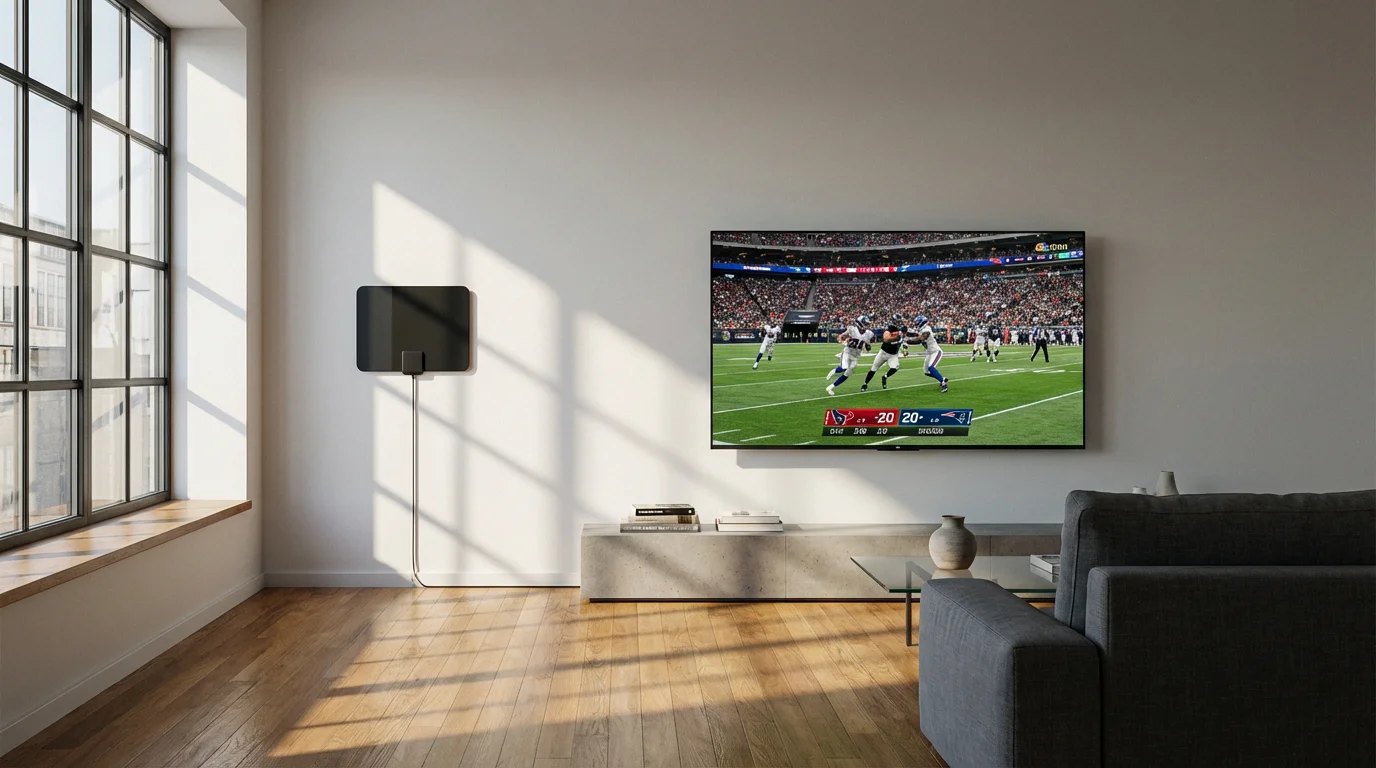
The “Free” Legal Hack: Over-the-Air Antennas
You do not always need a subscription to watch major sports. The broadcast networks—CBS, NBC, FOX, and ABC—carry the Super Bowl, the World Series, the NBA Finals, The Masters, and local NFL games every Sunday.
By purchasing a one-time digital antenna (ranging from $20 to $60), you can pick up these signals over the air for free. The picture quality is often better than streaming because the signal is uncompressed.
Pro Tip: Modern devices like the HDHomeRun or Tablo connect your antenna to your Wi-Fi network. This allows you to stream your free antenna channels to any smart TV or phone in your house and even works as a DVR to record games.
Understanding Blackouts and Regional Sports
One of the biggest frustrations that drive fans to illegal sites is blackouts. You subscribe to a service, pay the money, and then try to watch your home team, only to see a message saying, “This event is blacked out in your area.”
Why does this happen?
Sports leagues sell rights to different broadcasters. Usually, a Regional Sports Network (RSN) buys the exclusive rights to air local games in your specific zip code. If the game is airing on your local RSN, the national broadcast (like ESPN or NBA League Pass) is contractually forced to block the feed in your area to protect the RSN’s viewership.
The Solution:
To watch local teams, you generally need a service that carries your specific RSN (usually DirecTV Stream or Fubo) or an antenna if the game is on a broadcast network. National services like ESPN+ or league passes (NBA League Pass, MLB.tv) are strictly for out-of-market games.
Comparison: The True Cost of “Free” vs. Legal
We often look at the monthly subscription price, but we ignore the hidden costs of piracy. Here is a breakdown of what you are really trading off.
| Feature | Legal Streaming Service | Unofficial / Illegal Site |
|---|---|---|
| Cost | $40 – $80 / month | $0 (monetary) |
| Reliability | High (99.9% uptime) | Low (Frequent buffering/crashes) |
| Video Quality | HD / 4K | Often SD (360p/480p) |
| Security | Safe & Encrypted | High risk of malware/phishing |
| Device Compatibility | Smart TVs, Phones, Consoles | Browser-only (often blocked on TVs) |
| Features | DVR, Pause Live TV, Multi-view | None |
Actionable Tips to Save on Sports Streaming
If the legal prices scare you, do not resort to piracy immediately. Use these strategies to lower your bill:
- Churn Your Services: Do not stay subscribed all year. Subscribe to Sling Orange during Football season, then cancel it in February. Subscribe to Peacock only for the Olympics or Premier League season, then pause it.
- Use “TV Everywhere” Logins: If your parents or a generous friend still have a cable or satellite subscription, ask if you can use their login credentials. You can download apps like ESPN or FOX Sports on your streaming device and log in with their cable provider info. This is generally permitted by providers (though password-sharing rules are tightening).
- Look for Bundles: As CNET highlights, bundles are the new standard. The Disney bundle (Hulu, Disney+, ESPN+) offers significant savings over buying them separately.
- Check Mobile Plans: Carriers like T-Mobile, Verizon, and AT&T frequently offer free subscriptions to Hulu, Disney+, or MLB.tv as perks for their unlimited data plans. Check your mobile account to see if you have unclaimed freebies.
Frequently Asked Questions
Is it illegal to use a VPN to watch sports?
Using a VPN (Virtual Private Network) itself is legal in most countries, including the US. However, using a VPN to bypass blackout restrictions violates the Terms of Service of most streaming platforms. While you won’t go to jail, the streaming service has the right to ban your account if they detect you are spoofing your location.
Can I go to jail for watching a stream on a site like StreamEast?
It is highly unlikely. Copyright enforcement agencies target the operators of these websites, not the individual viewers. However, your Internet Service Provider may penalize you, and you expose your personal data to criminals running these sites.
What is the cheapest way to watch the NFL?
The cheapest way is using an Over-the-Air (OTA) antenna. This gives you access to local games on CBS, FOX, and NBC, plus Sunday Night Football, for a one-time cost of the hardware ($20-$50). For cable games (Monday Night Football), you would need a subscription like Sling TV or ESPN+.
Why is my legal stream delayed compared to cable?
Streaming requires the video to be processed, encoded, and sent over the internet, which introduces a delay (latency) of 20 to 60 seconds compared to cable or antenna broadcasts. If you are texting friends watching on cable, you might hear about the touchdown before you see it.
Disclaimer: Live TV streaming prices and channel lineups change frequently. Local channel availability varies by location. Always use the free trial to verify your local channels are included before committing. Sports blackout rules may affect some live events.



Leave a Reply